
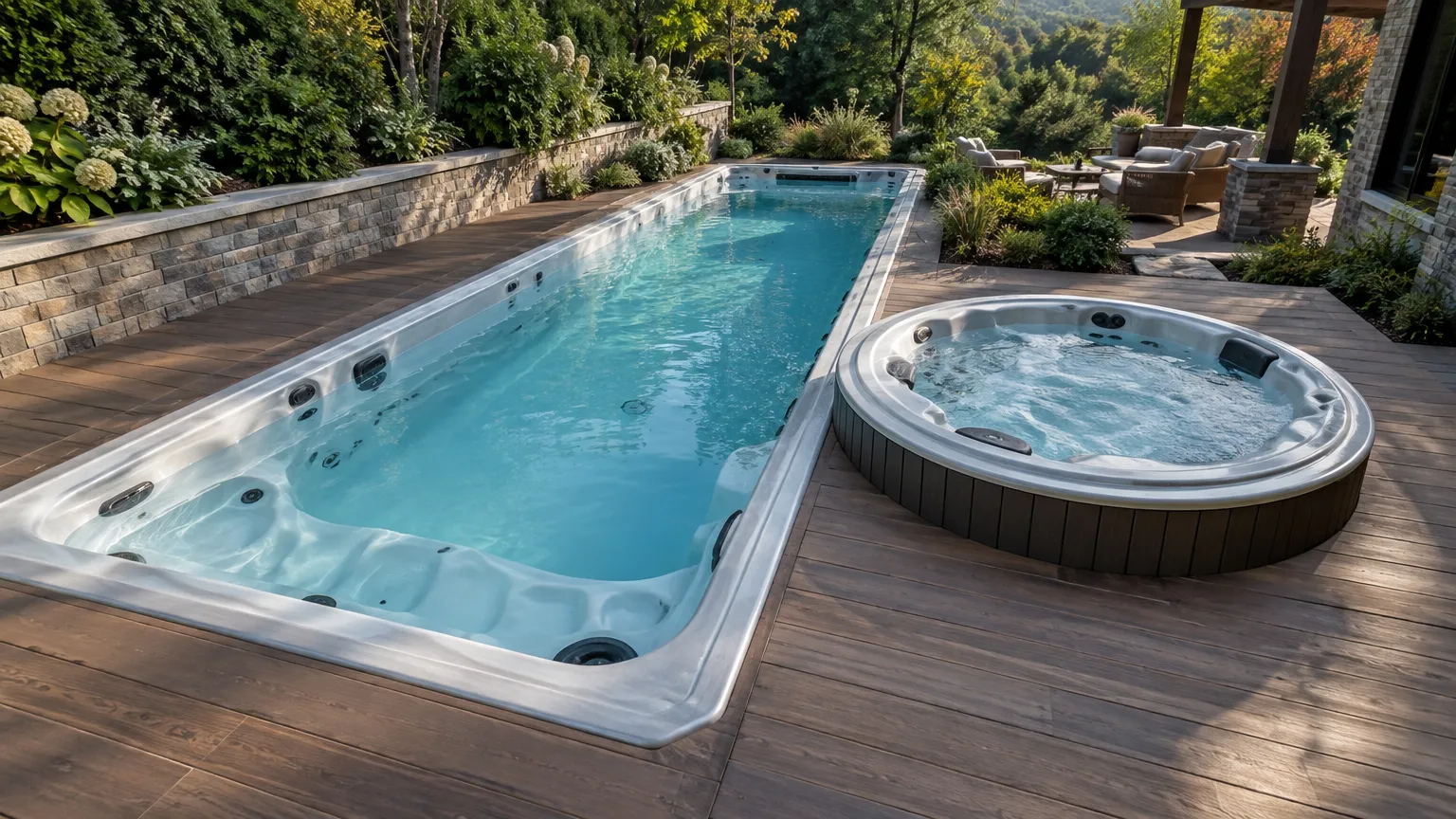
Choose a swim spa if you want to swim in place or exercise in the water. Choose a conventional hot tub if you want to soak, enjoy massage, and use a smaller footprint. Swim spas typically measure 8 to 19 feet long, while hot tubs often seat two to six people, depending on the model. The U.S. Department of Energy defines a swim spa as a portable electric spa designed to create water flow for recreation, including swimming in place.
Your usual activities and available yard space can help you narrow your options. Consider more than the spa itself: access, surrounding hardscape, and how the area connects to the rest of your outdoor living space matter, too. All County Pools and Spa Inc. has experience in pool installation and backyard transformations across greater Los Angeles.
Key Takeaways
-
You should choose a swim spa if swimming in place or aquatic exercise is your priority, and a conventional hot tub if soaking, massage, and a smaller footprint matter more.
-
Before choosing a model, compare its dimensions with your yard and delivery route: swim spas typically measure 8 to 19 feet long, while hot tubs often seat two to six people.
-
Budget for the complete project, not just the spa: estimated purchase prices are $2,000–$11,000 for a hot tub and $7,000–$50,000 for a swim spa, with an estimated swim spa average of $22,500; site preparation, access, and installation can affect the final cost.
-
Before buying, compare each model’s maintenance instructions and energy specifications, remember that hot tubs should typically be drained and cleaned every three to four months, and keep hot-tub water at or below the CDC’s 104°F (40°C) limit.
Which Fits Your Plans: Swim Spa or Hot Tub?
Choose a swim spa if swimming in place and aquatic exercise are priorities. Choose a conventional hot tub if soaking, massage, and a smaller footprint matter more. The main difference is purpose: the U.S. Department of Energy defines a swim spa as a portable electric spa designed to create water flow for physical activity, including swimming in place. A conventional hot tub is primarily designed for soaking and relaxation.
Neither option is universally better. The right fit is the one you expect to use for its main purpose, so consider what you want to do during a typical week. If you want water workouts to be part of your routine, a swim spa’s current is central to your plans. If you mainly want to relax after the day or soak with family and friends, a conventional hot tub is a closer match.
For example, prioritize a swim spa if you plan to swim in place regularly or include aquatic exercise in your schedule. Prioritize a hot tub if you usually want to unwind, enjoy massage, and soak with others. If both activities appeal to you, consider which one you would make time for most often. Your primary use, rather than a general ranking of the options, is the clearest guide to choosing.
How Do Size and Space Compare?
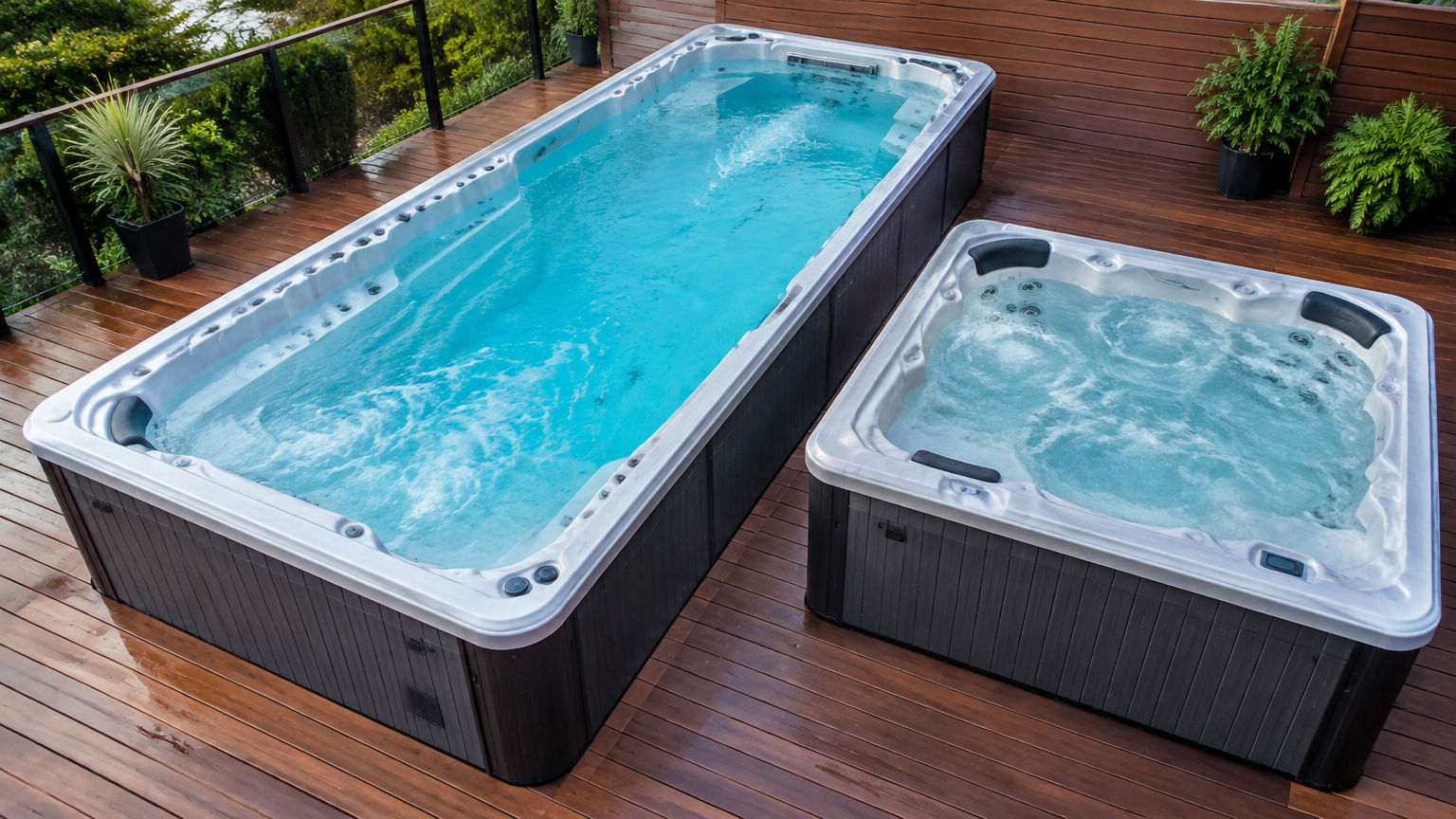
A swim spa usually takes up a longer, more linear area of your yard, while a hot tub is generally more compact. Swim spas typically range from 8 to 19 feet long; hot tubs typically seat two to six people, depending on the model.
Before you shop, look beyond the spot where the spa might sit. Check where it could go, whether the delivery route has enough clearance, and how it would fit alongside paths, seating, privacy features, and other outdoor elements. For example, a spa may fit on a patio but leave too little room for a clear walkway or outdoor dining area.
In a greater Los Angeles backyard, compare the spa’s footprint with a space-saving plunge pool or a wider pool-and-hardscape plan. A plunge pool may better suit your plans if you want a compact pool, while a broader layout can make room for poolside seating and other outdoor features. All County Pools and Spa Inc. designs space-saving plunge pools and manages pool construction and outdoor-living elements, including custom hardscaping, patio covers, fire pits, and outdoor kitchens. Planning the whole yard together can help you decide how to make the best use of your space.
What Does Each Option Cost?
A hot tub has an estimated purchase price of $2,000–$11,000, while a swim spa is estimated at $7,000–$50,000, with an estimated average of $22,500. Treat these figures as broad estimates, not a local quote or guaranteed price. The final amount depends on the model and features you choose, as well as site preparation, delivery access, and installation requirements. Plan for the complete project, not just the spa’s purchase price. For example, limited delivery access or a site that needs preparation can affect the work required to install the spa. The model and installation requirements also shape the project, so compare options by the full scope of work rather than product price alone. Then consider the complete cost alongside how often you expect to use the spa. A swim spa may offer value if you plan to make water exercise part of your routine; a hot tub may better suit regular soaking and relaxation. Consider outdoor-living features you expect to enjoy, too, such as a comfortable place to sit nearby. Listing the activities and features you’ll use can help you decide whether the overall project fits your plans.
Which Is Better for Relaxation or Exercise?
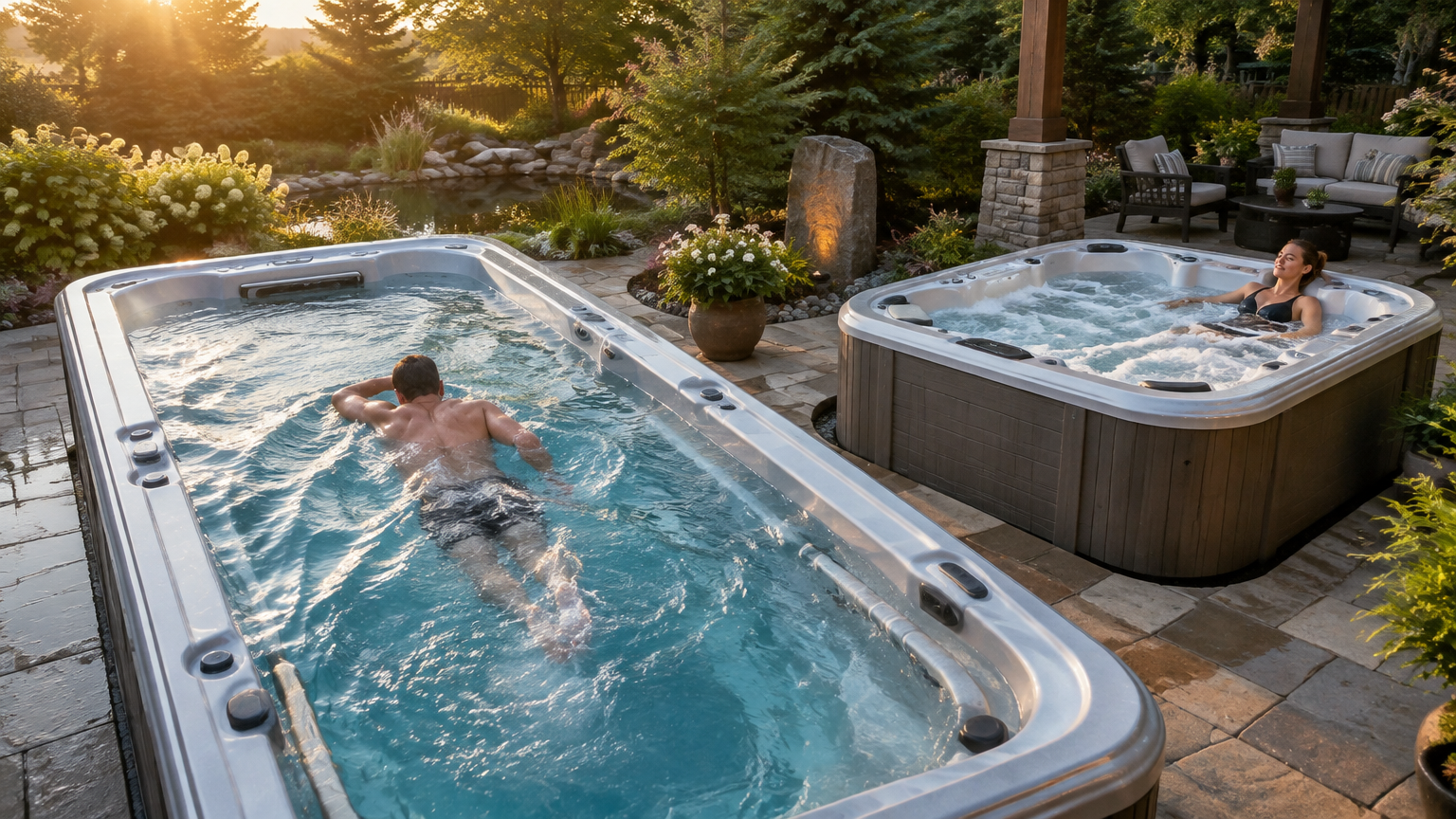
For swimming in place and aquatic exercise, a swim spa offers more; for soaking and relaxation, a conventional hot tub is the more focused choice. A swim spa combines heated water and massage jets with a current for swimming in place. The U.S. Department of Energy describes swim spas as designed to create water flow for recreational physical activity, including swimming in place. You can swim against the current, then use the jets for massage or unwind in the warm water.
A conventional hot tub is designed for soaking, relaxation, and massage rather than sustained swimming. For example, if you picture easing into warm water after a busy day, a hot tub’s main purpose matches that routine. It does not provide the same exercise function as a swim spa’s swimming current.
The trade-off is that a swim spa adds an exercise function but requires more room, while a hot tub focuses on soaking. Combination models may seem to offer both experiences, but layouts and features vary. If you are considering one, check the specific model’s seating, swimming area, and temperature controls. Do not assume every combination unit has separate hot and cool zones or offers the same functions. A model with one shared water area, for instance, may not let you swim and soak at different temperatures at the same time. Compare the configuration with the activities you expect to do most often.
What About Upkeep, Energy, and Safety?
Upkeep, energy use, and safety depend on the model and how you use it. Before choosing, compare each spa’s cleaning instructions, energy specifications, and applicable safety guidance. Hot tubs should typically be drained and cleaned every three to four months; a swim spa’s maintenance schedule may differ, so check the manufacturer’s instructions.
The U.S. Department of Energy states that there are currently no federal energy-conservation standards for portable electric spas. Compare the energy specifications for each swim spa or hot tub you’re considering rather than assuming models have similar operating costs. The Department of Energy’s portable-spa information can help you understand the applicable standards.
Temperature matters for safe use: the Centers for Disease Control and Prevention advises that hot-tub water should not exceed 104°F (40°C). Check that the model’s controls and instructions support safe temperature settings, especially if multiple people will use the spa.
Requirements for residential portable spas and public facilities differ. The CDC’s Model Aquatic Health Code, whose fifth edition was posted in 2024, is guidance for public aquatic facilities, not federal law. A jurisdiction must adopt it for it to become law there. Separately, public pools and spas are subject to federal drain-cover requirements under the Virginia Graeme Baker Pool and Spa Safety Act. The requirements include compliant anti-entrapment drain covers, with additional protections for certain drain configurations.
How Do You Plan Installation?
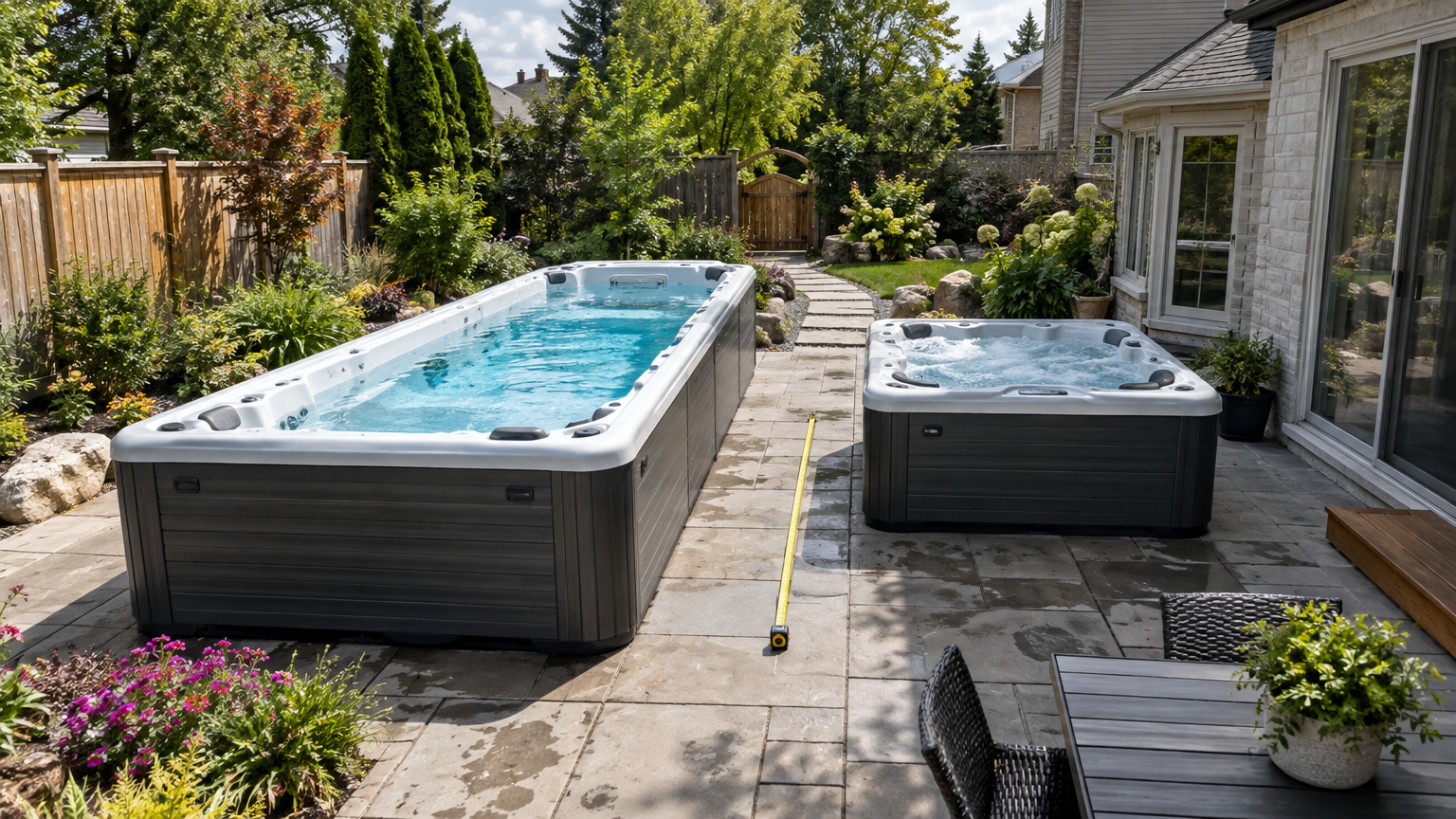
Before choosing a model, assess the intended location, delivery route, and surrounding backyard layout. Planning ahead can help you spot access or space conflicts before they affect your choice.
-
Mark the possible location and check that the selected model can fit there with room for access.
-
Trace the delivery route from the access point to the site, noting gates, turns, steps, and other potential obstacles.
-
Sketch the surrounding area, including paths, seating, privacy features, and any pool or outdoor-living elements you want to include.
-
Ask a qualified spa professional to review site preparation and the model’s installation requirements before scheduling delivery.
Installation of either type typically takes an estimated six to eight hours, but the time can vary by site and model. That estimate covers installation, not the full preparation process. If a pool or plunge pool may suit your backyard better, discuss your goals with a qualified pool contractor. In greater Los Angeles, All County Pools and Spa Inc. specializes in pool installation, remodeling, and resurfacing, and can coordinate pool design with hardscaping and outdoor-living features such as patio covers, fire pits, and outdoor kitchens.
Match Your Spa Choice to Your Backyard
Decide whether you are choosing a spa as a stand-alone addition or planning a larger backyard change. If your yard also needs a pool, resurfacing, or a better connection between the house and outdoor space, include those priorities in the plan before settling on a spa location.
Make a short project brief with three items: what must stay, such as an existing pool or mature planting; what you want to add, such as a plunge pool, patio cover, fire feature, or outdoor kitchen; and which area could be reshaped. Add a simple overhead drawing or current yard photos. This gives a contractor a clear starting point for discussing layout, hardscape, and construction sequence, rather than treating the spa as an isolated purchase. If you have chosen a swim spa or hot tub, note the model you are considering and the space it needs, then ask how it fits the broader plan. If the available area feels tight, ask whether a space-saving plunge pool or revised hardscape plan better matches your priorities. For a major redesign, use the brief to discuss how pool construction, custom hardscaping, and outdoor features can be planned as one project.
All County Pools and Spa Inc. is a Los Angeles-based contractor managing pool installation, remodeling, resurfacing, and outdoor-living projects across greater Los Angeles. Explore Backyard Remodel Services in Los Angeles or contact All County Pools and Spa Inc. to discuss your backyard plan.
Frequently Asked Questions
1. How deep is a swim spa?
Swim spa depth varies by model, so check the manufacturer’s specifications for water depth rather than relying on the spa’s outside dimensions. Consider whether the depth suits the swimming or aquatic exercises you plan to do.
2. Does a swim spa increase home value?
A swim spa may appeal to some buyers, but you should not count on it increasing your home’s resale value. Its effect can depend on buyer preferences, the spa’s condition, and how well it fits the rest of your backyard.
3. Which hot tub brand is best for home use?
No single hot tub brand is best for every home. Compare models by fit, seating, energy specifications, maintenance instructions, and the manufacturer’s warranty and service options.
4. Are swim spas as hot as hot tubs?
A swim spa can have heated water, but its temperature range depends on the model and configuration. Check the manufacturer’s temperature specifications, especially if you want both swimming and soaking. The CDC advises that hot-tub water should not exceed 104°F (40°C).
5. What is the difference between a spa pool and a Jacuzzi?
A spa pool is a general term for a pool or tub designed for warm-water soaking, while Jacuzzi is a brand name often used informally to refer to a hot tub. Check the product description to see whether you are looking at a specific Jacuzzi brand model or a spa from another manufacturer.