
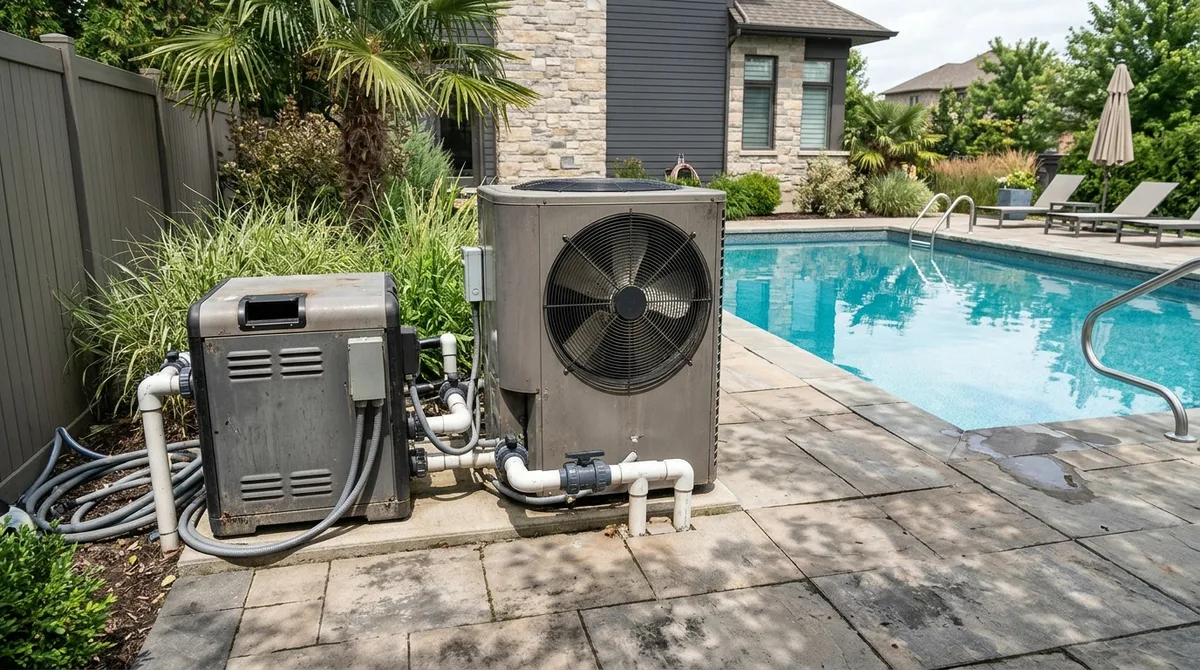
Choosing between a pool heater and a heat pump often comes down to how you use your pool. A heat pump suits regular swimming and steady temperature maintenance, while a gas-fired heater may suit occasional swims or situations where you need heat faster. Typical pool heat pumps have a coefficient of performance (COP) of 4.0–6.0, but that measure does not guarantee a lower bill. Your utility rates and heating schedule matter. The Air-Conditioning, Heating, and Refrigeration Institute notes that heat pumps are intended to maintain temperature rather than provide fast heating.
A California Energy Commission model for Santa Monica found that heating a 20,000-gallon pool from 57°F to 80°F took about 18 hours with a large gas heater and about 35 hours with a heat pump. Actual timing depends on pool size, starting temperature, weather, and heat loss. Use the comparison as a planning reference, not a promise.
Key Takeaways
- Pool-heater running costs are best compared using your utility rates and expected heating schedule, not COP alone.
- For permit applications submitted from January 1, 2026, California requires new single-family pools to use heat-pump or solar primary heating, subject to exceptions.
- A pool cover helps either heater retain warmth between swims by limiting heat loss.
- Pool-heater maintenance needs and service life vary by model, so owners should follow the manufacturer’s requirements rather than assume a universal schedule.
How Do Pool Heaters And Heat Pumps Work?
A heat pump is often a good fit for maintaining a steady pool temperature with regular use, while a gas-fired heater may suit occasional swims or situations where you need heat faster. Both are pool heaters, but they use different energy sources. A gas heater burns fuel and transfers the resulting heat to the water, while a heat pump captures heat from outdoor air and moves it into the pool.
A heat pump uses a fan and refrigerant circuit to collect heat from outdoor air, then transfers that heat to the water. Because its heating process relies on heat in the air, outdoor conditions can affect its performance. A gas heater generates heat through combustion rather than collecting warmth from the air.
A heat pump’s coefficient of performance compares the heat delivered with the energy consumed. That measure alone cannot tell you which option will produce the lower bill. The result depends on your utility rates and how you use the pool. Your decision also depends on how quickly you want the water to warm, the outdoor conditions where the equipment will operate, and how often you plan to swim.
Which Costs Less To Buy And Run?
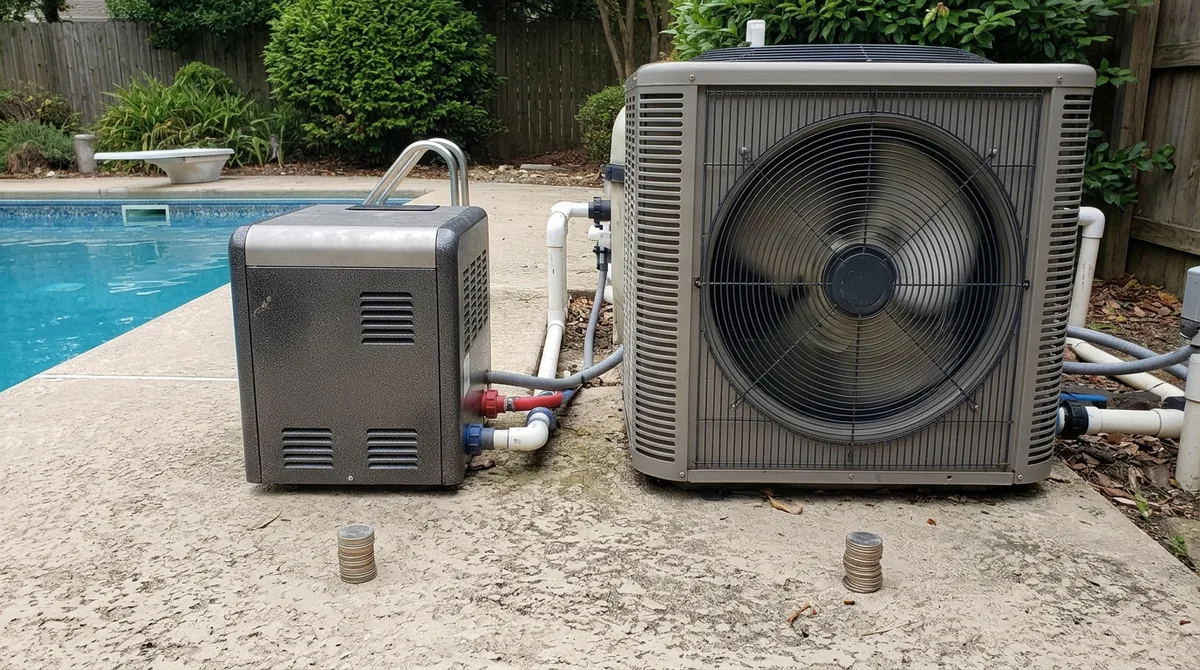
A gas heater may cost less to buy, but the less expensive option overall depends on installation needs, your utility rates, and how often you heat the pool. Equipment estimates are not the same as installed project costs. Electrical upgrades or other site-specific work can change the total.
A May 2024 draft socioeconomic assessment used online quote inputs of $4,920 for a Type 1 heat-pump pool heater and $1,800 for a comparable gas heater. The assessment assumed a $625 electrical-panel upgrade for an existing building and estimated incremental capital costs of $3,745 for existing buildings and $3,120 for new buildings. These figures come from a draft assessment, not a current installed-price quote for your project.
Electricity costs depend on your utility territory and rate plan. For example, LADWP’s residential rates list R-1A total consumption charges of $0.27292 per kWh in Tier 1 and $0.33151 per kWh in Tiers 2 and 3 for October through December 2026, before taxes. These are electricity charges per kilowatt-hour, not a pool-heating bill.
Effective November 1, 2026, SoCalGas’s core sales procurement component was 38.294 cents per therm. This is the procurement component, not the complete customer gas rate. Kilowatt-hour and therm charges alone therefore cannot establish which heater will cost less to run.
Compare estimated energy use with the rates for your utility territory and rate plan, then factor in your planned heating schedule and likely installation needs. A pool kept warm regularly can use a different amount of energy from one heated only for occasional swims, even with the same equipment. Ask for equipment and installation costs to be shown separately, and compare estimated operating costs using the rates that apply to your account. Do not assume that one Greater Los Angeles rate example represents every household.
How Fast Will Each Heat Your Pool?
A gas heater can raise pool temperature faster, while a heat pump generally warms water more gradually and is better suited to maintaining a target temperature. In a 2019 California Energy Commission model for Santa Monica, heating a 20,000-gallon pool from 57°F to 80°F took about 18 hours with a 266,000-Btu-input gas heater, compared with about 35 hours with either a 135,000-Btu-input gas heater or a 110,000-Btu-output heat pump, according to the Santa Monica pool-heating model. These modeled times illustrate how heater capacity can affect warm-up. They are not a guarantee for another pool.
Pool volume, starting water temperature, and your desired temperature all affect how much heat the water needs. Weather and heat loss also influence heating time. Cooler outdoor air can reduce a heat pump’s performance, while heat escaping from the water means the heater must work to replace it.
A heat pump draws heat from outdoor air, so its performance depends on conditions where it operates. Climate and time of year matter, and you should not assume the same heat pump will deliver the same warm-up time in every season. A pool cover can help limit heat loss, but it does not make heating speed consistent.
Choose equipment sized for your pool’s volume, desired temperature, and local conditions. The right capacity also depends on whether you want faster recovery before a swim or steady temperature maintenance over time. A larger gas heater may shorten warm-up in some cases, while a heat pump may suit a plan that allows more time to reach the target.
Match The Heater To Your Use Pattern
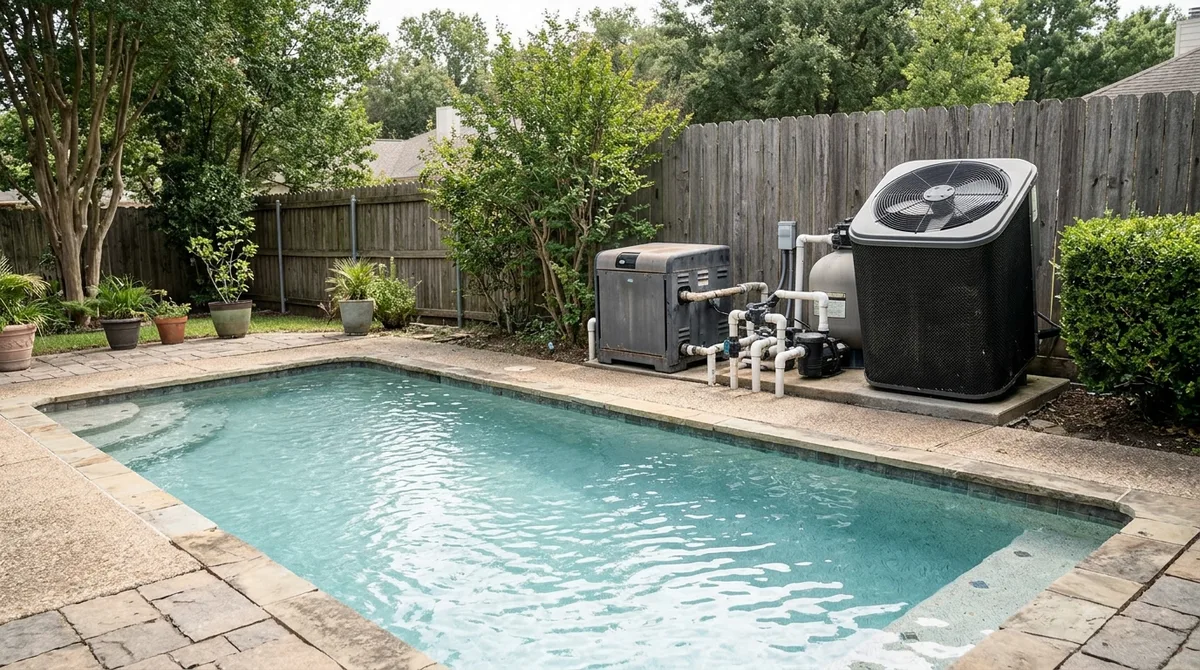
If you swim often and want the water near a consistent setpoint, a heat pump can suit a routine that allows gradual heating and ongoing temperature maintenance. If swims are occasional or decided at short notice, a gas heater’s faster heat may better match your plans. Consider how many days you expect to swim and whether you can start heating well before you get in.
A pool cover helps limit heat loss between swims, allowing either type of heater to retain warmth more effectively. Covering the pool when it is not in use can help maintain a steadier temperature and reduce the amount of heat the system needs to replace.
Some pool plans combine approaches: a heat pump can maintain temperature, while a gas heater provides supplemental or faster heat when needed. Any combination depends on equipment compatibility and applicable code requirements, so have the system design evaluated as a whole.
Season extension depends on the swimming window you want, how consistently you retain heat, and outdoor conditions during the months you plan to use the pool. A heat pump’s output can vary with air temperature, while a gas heater’s faster response may help with occasional swims in cooler weather. Decide whether you want to swim regularly through cooler periods or only add a few swimming opportunities, then match the heating schedule and cover use to that goal.
What California Installation Rules Apply?
California’s 2025 Energy Code sets heat-pump-or-solar primary-heating requirements for new single-family pools, while Rule 1146.2 can affect qualifying pool heaters. Applicable requirements depend on the project and equipment. The code took effect January 1, 2026, and permit applications submitted on or after that date must comply, as explained by the California Energy Commission’s 2025 Energy Code page.
Under Section 110.4(c), a new single-family pool or spa must use a heat-pump pool heater, solar thermal system, or combination as its primary heater. Gas or electric-resistance heat may be used as supplemental heat under stated requirements. The section also includes exceptions for certain alterations to existing pools and other cases. Section 110.4(b)(3) requires a cover for outdoor pools and spas with electric or gas heating equipment. The California Energy Commission’s Energy Code Support Center provides the code provisions.
For pool heaters rated from 75,000 Btu/hr to 2 million Btu/hr, the South Coast AQMD’s amended Rule 1146.2 lists a 15-year unit-age criterion for Type 1 pool heaters. Its Phase II zero-emission compliance dates are January 1, 2028, for new buildings and January 1, 2031, for existing buildings.
A site-specific review should check the heater’s rating and type, project category, gas connection or electrical capacity, equipment placement, permitting, and applicable code requirements. Permit jurisdiction matters too: Los Angeles County Public Works handles permits for unincorporated County properties, while properties outside County jurisdiction may be handled by another permitting office.
Maintenance, Lifespan, And Environmental Trade-Offs
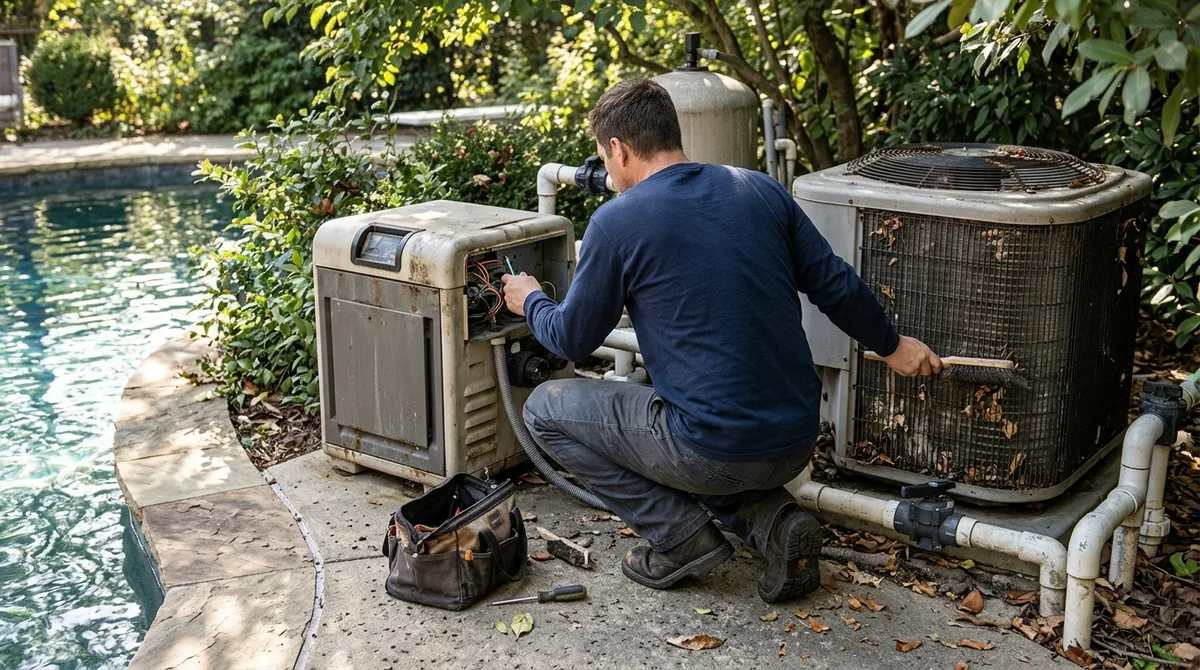
Gas-fired heaters and heat pumps both need routine care, but their service needs differ. A gas heater has a burner, combustion chamber, gas connections, venting, and a water-side heat exchanger. A heat pump has a fan, air-side coil, refrigerant circuit, electrical controls, and a water-side heat exchanger. Access for inspection and service depends on the equipment and its placement, while pool water chemistry and circulation affect components that contact the water. Check the manufacturer’s maintenance requirements for the specific model rather than assuming a universal service schedule or lifespan.
The environmental comparison depends on energy use and its source. A gas heater burns fuel on site, while a heat pump uses electricity to move heat from outdoor air into the pool. The heat pump’s overall impact therefore depends partly on the electricity supply. Both systems’ impacts are also shaped by how much energy they use to heat the water.
When comparing options, consider maintenance needs, access to qualified service, operating pattern, and expected equipment use alongside heating speed and utility costs.
Choose A Heater For Your Pool Plan
Before choosing equipment, prepare a project brief with your pool’s approximate volume, desired water temperature, planned swimming schedule, and the utility territory and rate plan for the property. For an existing pool, include the current heater model, any known electrical-panel or gas-line limitations, and a photo of the equipment area. For a new pool, bring the proposed pool plans and note whether the project includes a spa or other water features.
Ask for a side-by-side proposal that identifies each heater’s model and output, equipment cost, installation scope, any electrical or gas work, and estimated energy use calculated with your utility rates. Have the proposal state its assumptions about weather, target temperature, and pool-cover use so you can compare estimates on the same basis. If you are renovating, ask how heater replacement fits with planned resurfacing, new coping, or a redesigned pool deck.
All County Pools and Spa Inc. serves Tarzana and communities across Greater Los Angeles. Contact All County Pools and Spa Inc. at (818) 720-3316 to discuss your pool project.
Frequently Asked Questions
1. Can one pool heat pump also serve an attached spa?
One heat pump can serve a pool and an attached spa when the system is designed with compatible plumbing, valves, and controls. Because a spa may need a higher temperature and quicker recovery than the pool, have the equipment sized and configured for both uses.
2. Can I replace a gas heater with a heat pump and keep the rest of my pool equipment?
You can often keep compatible circulation and filtration equipment when replacing a gas heater with a heat pump. The new heater still needs suitable water flow and plumbing connections, and the electrical supply must support it, so have those components checked before choosing a replacement.
3. Does an inverter pool heat pump change the gas-versus-heat-pump cost comparison?
An inverter heat pump can adjust its output to match heating demand, but that does not by itself determine whether it will cost less to run than a gas heater. Compare the model’s estimated energy use with your utility rates and swimming schedule, and include purchase and installation costs.
4. Can a pool heat pump cool the water as well as heat it?
Some pool heat pumps can cool water, but cooling is not available on every model. Check the equipment specifications for a cooling mode and confirm that the system’s controls and plumbing are suitable for it.