
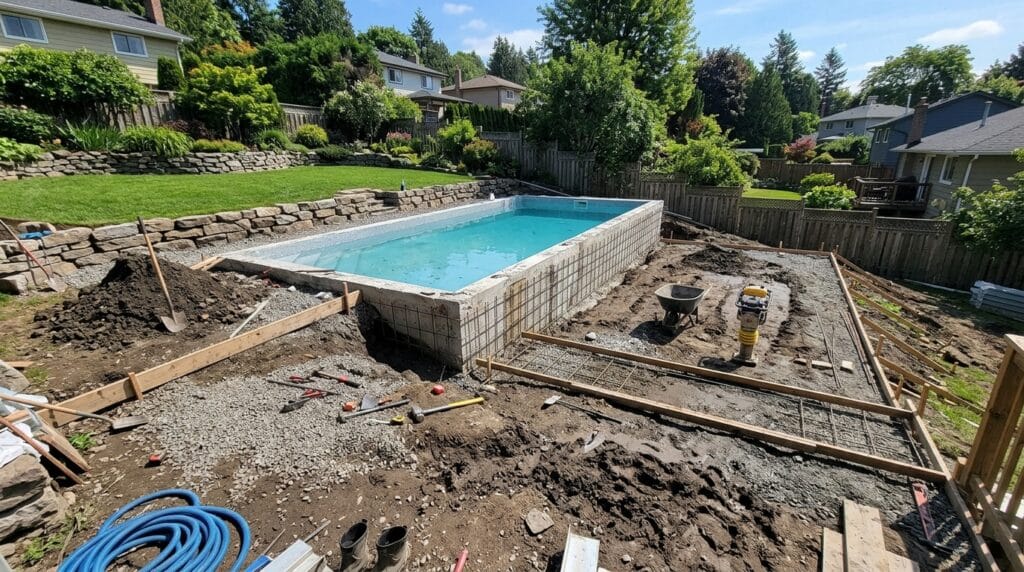
The semi-inground pool installation cost can range from about $7,000 to $20,000 for a professionally installed pool, with many standard projects costing near $12,000. The price can rise quickly when plans include excavation, retaining walls, premium decking, difficult site access, or extensive landscaping. Understanding what affects the estimate helps you set a realistic budget before choosing a pool size, layout, or finish.
A small pool on an accessible, level lot may cost closer to $7,000 to $10,000, while larger or more complex installations can reach $25,000 to $46,000 or more. Beyond the pool itself, plan for permits, electrical work, pumps and filtration, drainage, fencing, and site preparation.
Key Takeaways
- Budget approximately $7,000–$20,000 for a professionally installed semi-inground pool, with many standard projects costing around $12,000. Larger or highly customized installations can reach $25,000–$46,000 or more.
- Site conditions drive the final price: sloped or rocky yards, difficult equipment access, excavation, drainage, grading, and retaining walls can substantially increase costs.
- Plan for expenses beyond the pool itself, including permits, electrical connections, pumps and filtration, fencing, decking, landscaping, utility work, and site restoration.
- Get itemized, site-specific estimates that clearly separate the pool, labor, excavation, structural support, equipment, permits, drainage, and finishing work before selecting a contractor.
Introduction To Semi-Inground Pool Costs
A semi-inground pool can be a budget-conscious solution for homeowners with sloped yards, limited space, or challenging property layouts. Because part of the pool is set into the ground, installation may require less excavation than a fully inground design while still creating a more finished look than an above-ground pool. In the U.S., semi-inground pool installation cost typically falls between $7,000 and $20,000, with many standard projects averaging around $12,000. Smaller pools with easy site access may cost closer to $7,000 to $10,000, while larger models and more involved installations can reach $16,000 to $25,000.
Your final budget will depend on more than the pool itself. Other factors include excavation, soil conditions, equipment access, electrical work, drainage, and finishing materials. A sloped backyard may need grading, a retaining wall, or additional structural support to create a stable installation area. Custom decking, upgraded filtration, fencing, landscaping, and difficult access can push the total beyond $25,000. Major site work and premium features may bring the cost to $45,000 or more. Requesting a detailed, site-specific estimate is the best way to understand how your yard and design choices will affect the overall semi-inground pool installation cost.
Typical Semi-Inground Pool Installation Prices
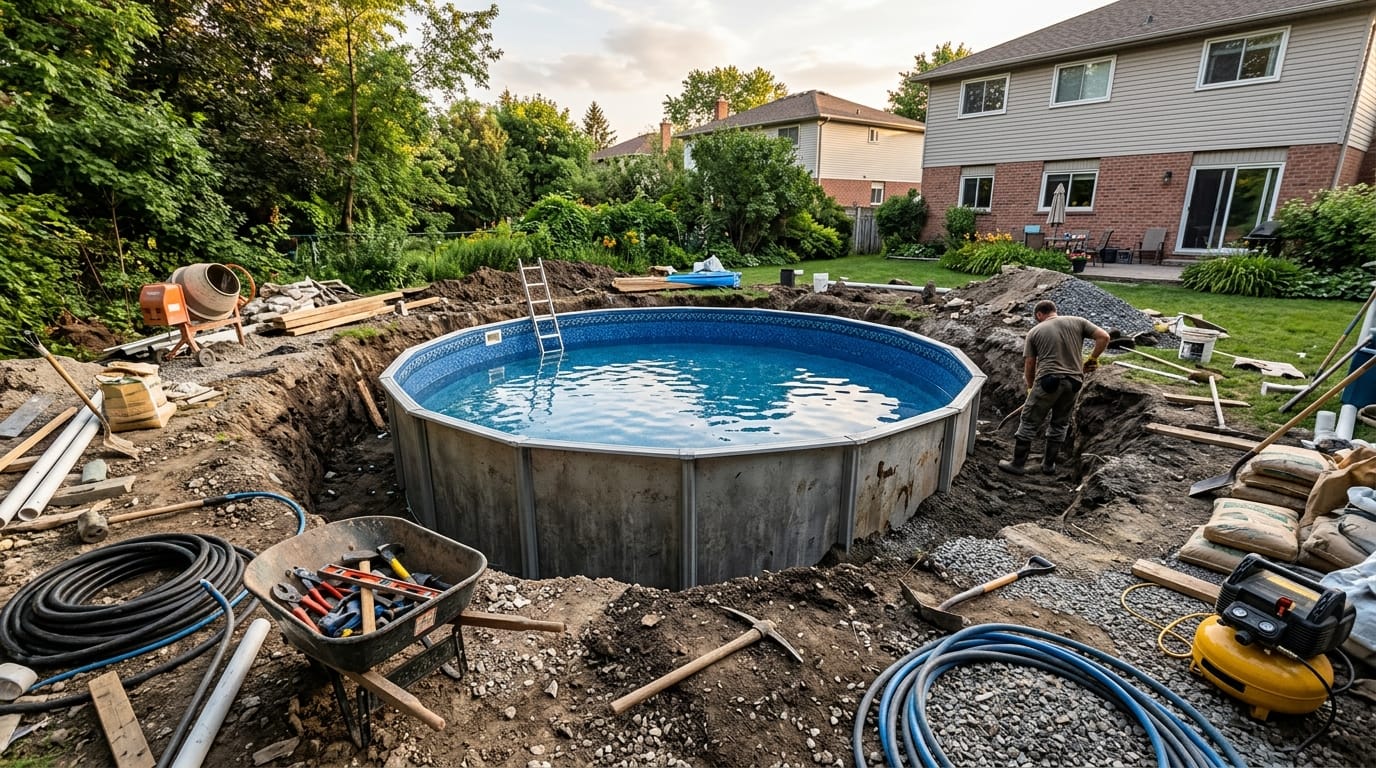
A realistic semi-inground pool installation cost in the U.S. is typically $7,000 to $20,000 for a professionally installed project, with many standard installations averaging around $12,000. Small, basic pools on level sites with easy equipment access often cost about $7,000 to $10,000. A standard 12 to 16 foot pool with excavation, filtration, and routine site preparation generally falls between $10,000 and $16,000. These estimates usually cover the pool structure and installation, but may not include extensive decking, fencing, electrical upgrades, or major drainage work.
Larger semi-inground pools commonly range from $16,000 to $25,000 when they require more excavation, stronger support systems, and moderate landscaping. Sloped yards can increase the budget because installers may need to grade the site, build retaining walls, improve drainage, or create a level base for the pool. Difficult access for trucks and excavation equipment can also raise labor costs, especially when materials must be moved through a narrow side yard or over a long distance. A site-specific estimate is important because even a relatively small pool can become more expensive when the property has steep grades or challenging soil conditions.
Premium projects may cost $25,000 to $45,000 or more when they include custom construction, substantial retaining walls, premium decking, upgraded finishes, lighting, or extensive landscape restoration. Material choices also affect the final price. Purpose-built semi-inground systems and durable finishes generally cost more than basic above-ground pool packages adapted for partial burial. Homeowners with budget constraints can often control costs by choosing a smaller pool, simplifying the surrounding deck, and scheduling installation when site access is easiest. A detailed quote should separate excavation, structural support, equipment, permits, landscaping, and other site-work expenses so the full financial commitment is clear.
Excavation And Sloped Yard Costs
Excavation and grading can significantly influence semi-inground pool installation cost, especially in a sloped backyard. A level site may need only basic digging and soil removal, while a slope can require cut-and-fill work, compacted base preparation, and additional drainage planning. For many U.S. projects, a basic semi-inground installation may cost about $7,000 to $10,000, but extensive site preparation can move the total closer to $16,000 to $25,000 or more. The final price depends on the pool size, slope severity, soil conditions, and how much material must be hauled away.
Rock excavation, buried debris, and limited equipment access can add labor, hauling, and machinery charges. If excavators or delivery trucks cannot reach the backyard easily, contractors may need smaller equipment or additional time to move materials through a narrow path. Drainage improvements, such as gravel systems, swales, or discharge piping, may also be necessary to prevent water from collecting around the pool structure. A professional site assessment should identify these conditions before construction begins, reducing the risk of unexpected change orders.
Retaining walls are another major cost consideration when a pool is installed across a slope or near a property boundary. These walls may be needed to stabilize the surrounding soil, support a raised pool section, or create a safe transition to decking and landscaping. Custom or substantial projects can bring the overall cost to $25,000 to $45,000 or more. However, a semi-inground design can limit the amount of earth that must be removed compared with a fully inground pool, which may reduce excavation, hauling, and structural preparation costs. Ask for an itemized estimate that separates grading, soil removal, drainage, rock work, access challenges, and retaining walls from the pool and installation prices.
Pool Materials And Installation Line Items
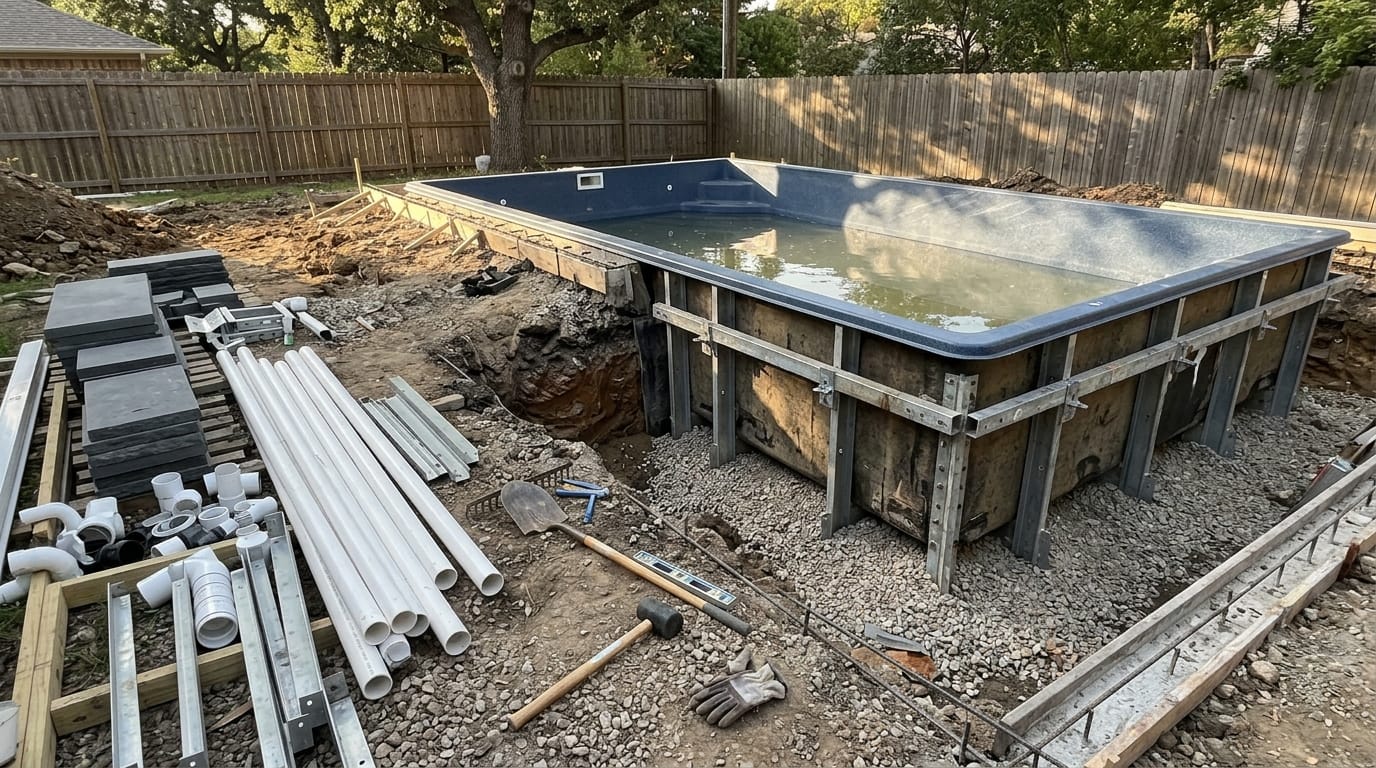
Semi-inground pool installation cost usually falls between $7,000 and $20,000 for a professionally installed U.S. project, with many standard installations near $12,000. Above-ground-style pools partially set into the slope are often the most budget-friendly, while fiberglass and vinyl options commonly cost about $10,000 to $25,000 installed, depending on size and excavation. Concrete pools are typically the most expensive choice, often reaching $25,000 to $46,000 or more because of custom construction, extended labor, and additional site work. A sloped yard can reduce visible wall height, but it may require grading, retaining walls, drainage, or reinforced backfill that raises the total.
The base pool price is only one part of the installation budget. A contractor-installed package may include the pump, filter, plumbing, liner or interior finish, coping, stairs, basic safety equipment, excavation, electrical connections, and permit fees, but each proposal should identify these items clearly. Homeowners should also ask whether decking, fencing, lighting, bonding, and utility trenching are included or billed separately. For vinyl pools, liner replacement and fitting costs matter over time, while fiberglass and concrete installations may have higher upfront material costs but different maintenance needs.
Buying a pool kit separately can lower the listed equipment cost, but it does not eliminate the labor and preparation required for a sloped backyard. The homeowner may still need to pay for delivery, excavation, leveling, wall assembly, plumbing, electrical work, inspections, coping, stairs, and safety features. Some contractors also charge more to install owner-supplied materials. Compare the complete installed price rather than the kit price alone, especially when access is difficult or retaining walls are necessary. A written estimate with allowances for soil removal, drainage, permits, and finish work will make the final semi-inground pool installation cost easier to predict.
Decking Retaining Walls And Final Budget
Semi-inground pool installation cost often starts around $7,000 to $20,000 for a professionally installed project, but a sloped yard can push the total much higher. Decking, fencing, landscaping, drainage improvements, lighting, and excavation are frequently priced separately from the pool package. Retaining walls are a major variable because they may require engineered design, reinforced construction, and additional grading to stabilize the hillside. For a larger pool or a site with substantial improvements, the complete investment can reach $25,000 to $46,000 or more.
Before requesting estimates, use this checklist to identify the work your property may require:
- Pool excavation, leveling, backfilling, equipment, permits, and utility connections
- Retaining walls, grading, erosion control, drainage, and difficult soil conditions
- Decking, steps, fencing, gates, landscaping, lighting, and final cleanup
- Equipment access, hauling distance, labor for tight spaces, and restoration of damaged areas
When comparing contractor estimates, evaluate the included scope instead of focusing on the advertised pool price alone. One quote may include excavation and basic equipment, while another includes the deck, drainage, electrical work, permits, and site restoration. Ask each contractor to separate base installation costs from allowances and potential change orders. Confirm wall construction, fencing, lighting, and landscaping specifications in writing. A detailed estimate with clear exclusions is usually more useful for planning your final budget than the lowest initial number.
Semi-Inground Pool Installation Cost Breakdown
A realistic semi-inground pool installation cost is typically $7,000 to $20,000 for a professionally installed project, with many standard installations landing near $12,000. Smaller pools on level, accessible lots may stay closer to the lower end, while larger pools, upgraded equipment, decking, and landscaping can push the budget to $16,000 to $25,000. Custom installations may reach $25,000 to $45,000 or more when they require extensive excavation, retaining walls, premium finishes, difficult site access, or specialized structural support. These ranges provide a useful starting point, but the final price depends heavily on the property and design choices.
Homeowners with sloped yards should obtain detailed, itemized quotes before committing to a contractor or pool plan. Each estimate should clearly identify excavation and grading, structural support or retaining walls, permits, drainage, pool equipment, utility connections, coping, decking, landscaping, and other finishing work. Comparing these line items can reveal potential site costs early and make it easier to evaluate the full financial commitment. For help planning a pool project as part of a larger outdoor upgrade, consult a qualified outdoor remodeling professional who can help develop a practical design and budget.
Frequently Asked Questions
1. What is the average semi-inground pool installation cost?
A professionally installed semi-inground pool typically costs between $7,000 and $20,000, with many standard projects averaging about $12,000. Smaller pools on level, accessible lots may cost $7,000 to $10,000, while larger or more complex installations can reach $25,000 to $46,000 or more.
2. What factors affect semi-inground pool installation cost?
The main cost factors include pool size, excavation, soil conditions, site access, drainage, electrical work, and the type of equipment required. Retaining walls, premium decking, fencing, landscaping, upgraded filtration, and difficult property layouts can significantly increase the final estimate.
3. Is a semi-inground pool less expensive than a fully inground pool?
A semi-inground pool can cost less than a fully inground pool because part of the structure remains above ground, which may reduce excavation and labor. However, sloped yards, retaining walls, structural reinforcement, and custom finishes can make some semi-inground installations comparable to or more expensive than basic inground pools.
4. How much does excavation add to the cost of a semi-inground pool?
Excavation costs vary based on the amount of soil to remove, ground conditions, equipment access, and disposal requirements. A level lot with clear access usually keeps excavation costs lower, while rocky soil, steep slopes, limited access, or extensive grading can add substantially to the project total.
5. What additional expenses should you budget for besides the pool?
Plan for permits, electrical connections, pumps, filtration, drainage, fencing, and site preparation in addition to the pool structure and installation. You may also need to budget for decking, retaining walls, landscaping, water delivery, and cleanup, depending on your property and design.
6. Can you install a semi-inground pool in a sloped backyard?
Yes, semi-inground pools are often a practical option for sloped yards, but the site must be properly graded and supported. Your project may require excavation, a retaining wall, drainage improvements, or additional structural reinforcement to create a stable and safe installation area.
7. How can you reduce semi-inground pool installation costs?
Choose a standard pool size and finish, install it on a level portion of your property, and select a location with easy access for excavation and delivery equipment. Comparing detailed contractor estimates and limiting custom decking, premium features, and extensive landscaping can also help control the budget.
8. How do you get an accurate semi-inground pool installation estimate?
Request an on-site estimate that accounts for your pool dimensions, soil conditions, slope, access, drainage, electrical needs, and desired finishes. Make sure the quote clearly separates the pool, labor, excavation, permits, equipment, structural work, and landscaping so you can compare proposals accurately.