
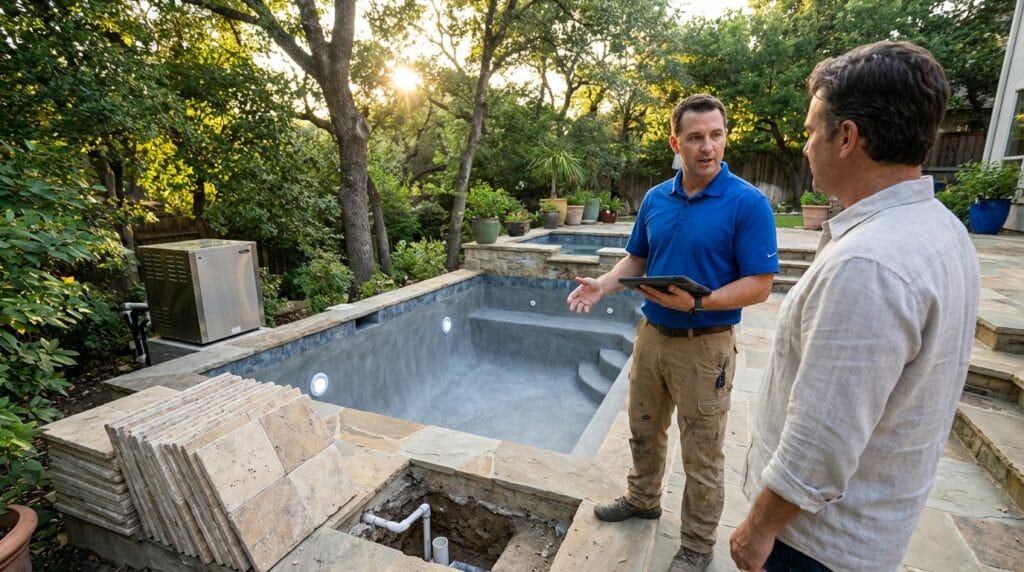
Transforming a compact backyard into a private sanctuary is highly attainable, but understanding plunge pool cost factors is the first step toward a successful installation. While these smaller basins offer a sophisticated alternative to full-sized pools, prices in 2025 typically range from $10,000 to $40,000, with a national average around $28,000. Your final investment depends heavily on whether you prioritize a budget-friendly vinyl liner or a high-end concrete build that can exceed $75,000.
Managing the financial aspects of pool ownership requires balancing your aesthetic vision with your site’s physical reality. Factors such as the dimensions of the shell, the complexity of the excavation, and the premium features you select dictate the total project quote. By focusing on the essential elements that drive pricing, you can design a refreshing retreat that aligns with both your lifestyle and your budget.
Key Takeaways
- The average cost of a plunge pool in 2025 is approximately $28,000, though projects range from $10,000 for basic vinyl liners to over $75,000 for custom concrete builds.
- Material selection is the primary driver of both upfront and long-term costs, with fiberglass offering a mid-range balance of durability and low maintenance compared to budget-friendly vinyl or premium concrete.
- Site preparation and installation methods significantly impact the final price, as in-ground excavation and difficult soil conditions can add thousands in labor and machinery fees.
- Total cost of ownership must include recurring expenses for chemical balancing, filtration, and heating, as well as periodic structural maintenance like liner replacements.
Material Selection And Shell Construction Expenses
Choosing the right material for your plunge pool shell is the most influential factor in determining your initial investment. For homeowners seeking an entry-level price point, vinyl liner pools typically range from $10,000 to $18,000. While these are the most budget-friendly options upfront, they require periodic liner replacements every five to ten years, which adds to the long-term cost of ownership. This material offers flexibility in shape but lacks the structural permanence found in more expensive alternatives. Many budget-conscious builders find this a practical way to enjoy a private soak without a massive financial commitment.
Prefabricated fiberglass shells serve as a popular mid-range choice, offering a balance of durability and ease of installation. These shells are manufactured off-site and delivered as a single piece, which significantly reduces the amount of time contractors spend in your backyard. Because the surface is non-porous, it resists algae growth and requires fewer chemicals than other materials. You can expect to pay a premium over vinyl for this convenience, but the reduced maintenance often justifies the higher initial price tag. This option is ideal for those who want a quick installation process and a smooth, finished look.
Custom concrete or gunite builds represent the high-end tier of plunge pool construction, often exceeding $40,000 and sometimes reaching $75,000 or more. This method allows for complete creative freedom, enabling you to design a pool that fits perfectly into unique areas or tight corners. Concrete is incredibly durable and can be finished with premium tiles or stone to match your home’s aesthetic. Although the construction process is longer and more labor-intensive, the result is a permanent structure that adds significant value to the property. These builds are favored by homeowners who view their plunge pool as a permanent architectural feature.
Impact Of Pool Dimensions And Depth
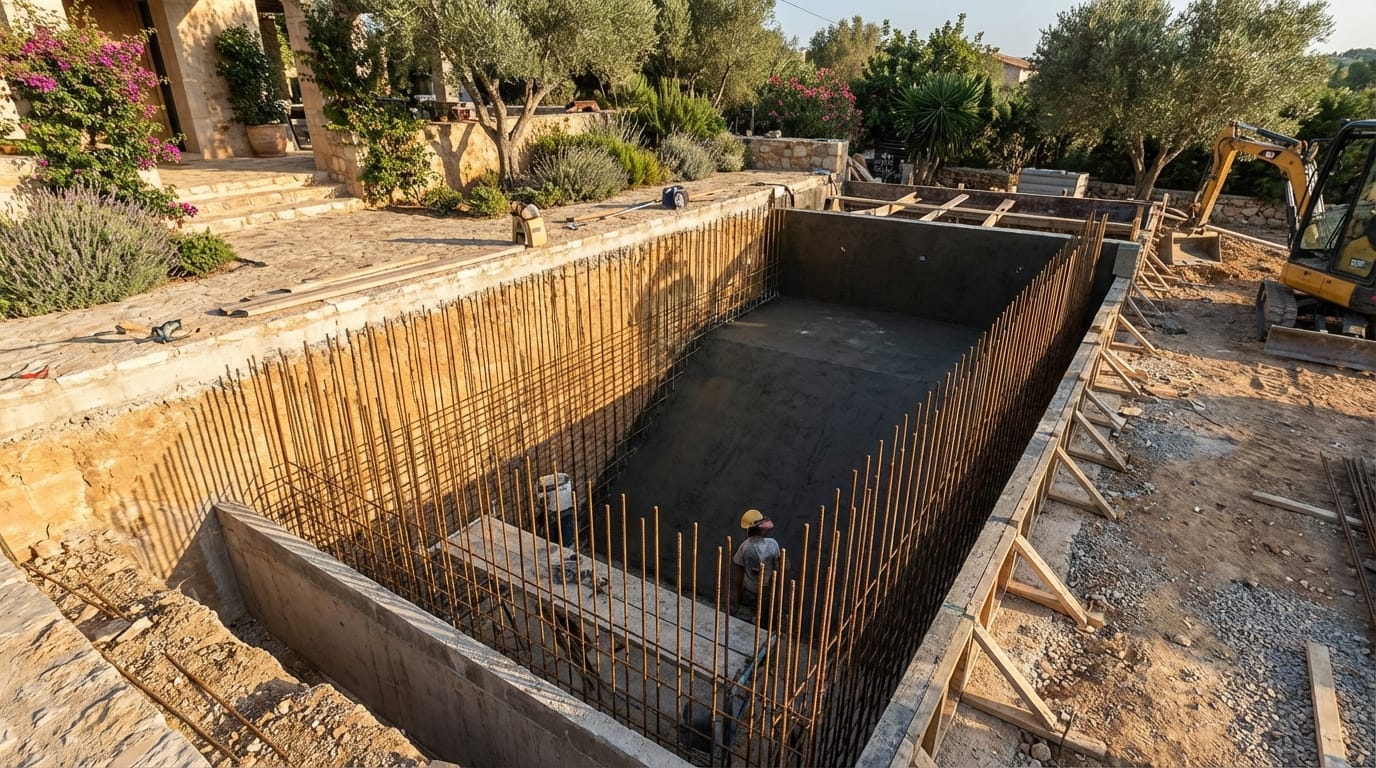
The physical footprint of your plunge pool is the most significant driver of the initial project estimate. While a compact 4×4 foot soaking tub might fall into the $5,000 to $30,000 range, scaling up to a 13×7 foot fitness oriented model often pushes costs between $30,000 and $60,000. Larger dimensions require a substantial increase in raw materials like concrete, steel reinforcement, and interior finishes. Beyond the shell itself, a larger surface area demands more powerful filtration systems and heaters to maintain water quality and temperature. Investing in a larger footprint essentially transitions the project from a simple dipping well into a high performance aquatic feature.
Excavation and labor costs scale quickly as the depth and width of the pool increase. Digging a deeper hole requires more heavy machinery time and results in a larger volume of dirt that must be hauled away and disposed of properly. If you choose a depth suitable for water aerobics or light swimming, the structural integrity of the walls must be reinforced to handle the increased water pressure. This additional engineering often leads to higher labor fees for specialized installers who must ensure the site is properly graded and supported. Consequently, even a few extra feet in length or depth can add thousands of dollars to the final construction bill.
The relationship between pool size and long term budgeting is equally important for homeowners to consider. A larger pool requires more chemicals for balancing and higher utility costs for heating the increased water volume. While a smaller 7×7 foot model is more efficient to maintain, those seeking a dual purpose space for exercise and relaxation find the higher upfront investment of a 13 foot pool worthwhile. Ultimately, choosing the right dimensions involves balancing your immediate installation budget with your lifestyle needs and future maintenance expectations. By understanding these spatial trade offs, you can more accurately predict where your plunge pool cost will land within the typical $10,000 to $40,000 price range.
Site Preparation And In-Ground Installation Variables
Choosing between an above-ground setup and an in-ground installation is one of the most significant financial crossroads you will face. An above-ground plunge pool often represents the most budget-friendly entry point, typically ranging from $10,000 to $20,000 since it bypasses the need for heavy machinery. These units sit directly on a reinforced pad or deck, which eliminates the labor costs associated with deep earthwork. However, while the initial price tag is lower, homeowners must consider the long-term aesthetic impact and the potential need for custom decking to hide the exterior of the shell.
Transitioning to an in-ground installation typically pushes your project toward the national average of $28,000 or higher due to intensive site preparation. Excavation alone can add thousands to your total, especially if your backyard has limited access for backhoes or contains rocky soil that requires specialized equipment. You must also budget for soil removal and hauling fees, which are often overlooked but can significantly impact the bottom line. These engineering requirements ensure the pool remains stable and level, preventing structural shifts that could lead to costly repairs in the future.
Beyond the hole in the ground, complex site variables like utility relocation and drainage management can drive custom concrete builds toward $75,000. If your chosen location sits near existing gas lines or electrical conduits, moving these services to accommodate the pool adds a layer of professional labor costs. Proper drainage is equally vital, as it prevents runoff from damaging your foundation or the pool shell itself. While these sub-surface expenses do not add visible flair to your backyard, they are critical investments that protect your property value and ensure the longevity of your aquatic retreat.
Long-Term Maintenance And Equipment Operating Costs
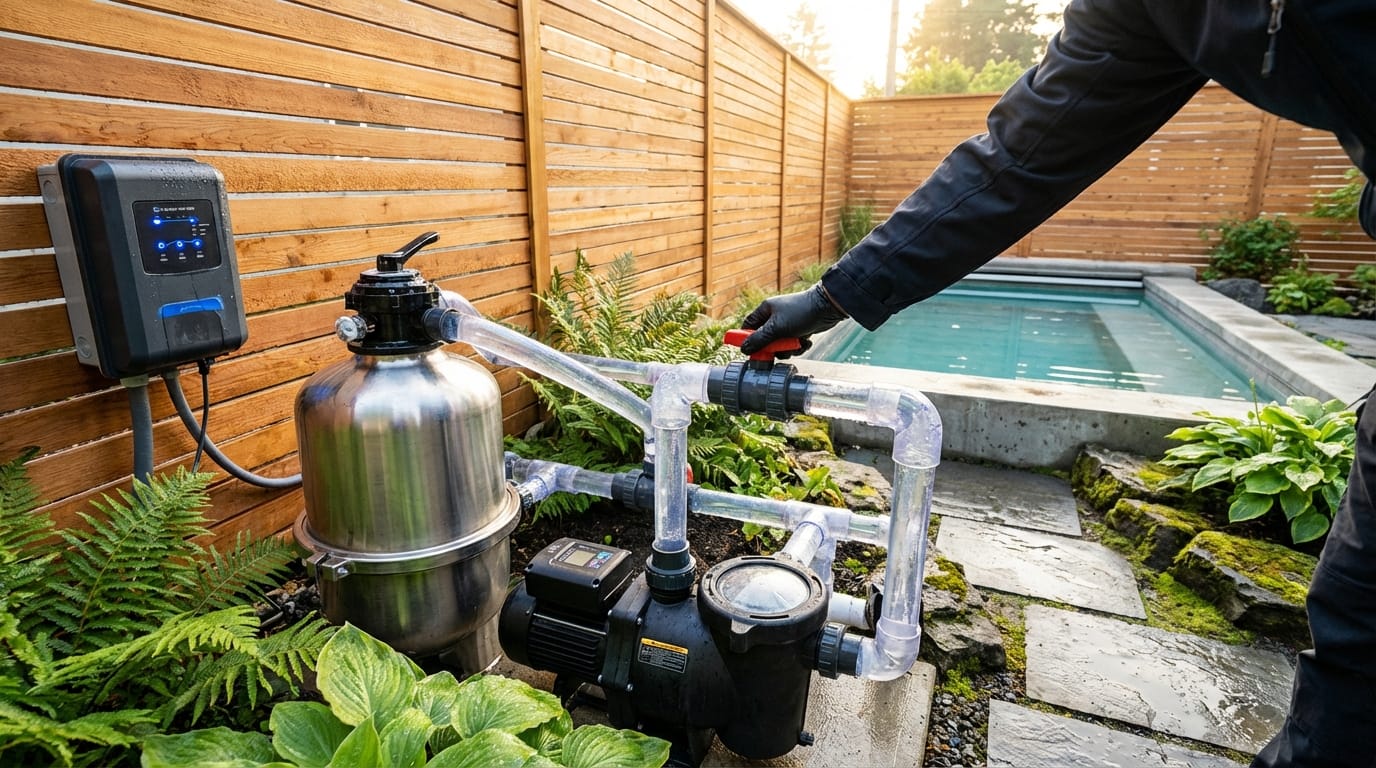
Beyond the initial installation price, budgeting for a plunge pool requires a clear understanding of monthly utility and equipment expenses. Because plunge pools have a smaller water volume than traditional pools, heating them is more cost effective, yet it remains a primary recurring expense if you prefer year round use. Electric heat pumps or gas heaters are popular choices, but their impact on your energy bill depends on your local climate and desired water temperature. Many homeowners find that investing in a high quality thermal cover can significantly reduce these heating costs by preventing heat loss overnight. Expect to allocate a portion of your monthly budget to power the filtration system, which must run regularly to keep the water clear and safe.
Maintaining chemical balance is another essential pillar of your long term financial plan for pool ownership. Whether you choose a traditional chlorine system or a saltwater generator, you will need to purchase testing kits and balancing agents to manage pH levels and alkalinity. Saltwater systems often have a higher upfront equipment cost but can lead to lower monthly chemical expenditures and a gentler swimming experience. Neglecting these treatments can lead to algae growth or equipment corrosion, potentially resulting in expensive repairs that far exceed the cost of routine supplies. Consistent monitoring ensures the longevity of the pool shell and internal components, protecting your initial five figure investment.
The mechanical components of your plunge pool, such as pumps and filtration units, also require periodic professional servicing and eventual replacement. While a well maintained pump can last several years, you should set aside a small reserve fund for equipment wear and tear. Filtration cartridges or sand media must be cleaned or replaced according to the manufacturer’s schedule to prevent the motor from overworking and burning out prematurely. If you opted for a vinyl liner, remember to account for the eventual replacement cost every five to ten years as part of your long term budgeting. By planning for these predictable operational costs now, you can enjoy your aquatic retreat without any unexpected financial stress.
Key Variables Influencing Your Plunge Pool Investment
Determining the final price of a plunge pool requires a careful evaluation of your specific backyard goals and site conditions. While the national average for installation hovers around $28,000, your total investment is heavily influenced by the material you choose and the size of the unit. Opting for a budget-friendly vinyl liner might keep costs between $10,000 and $18,000, whereas a high-end concrete or fiberglass build can easily exceed $40,000. Homeowners should also account for the dimensions of the pool, as larger models requiring more excavation and materials will naturally push the budget toward the higher end of the spectrum.
Beyond the basic shell, secondary factors like site accessibility and custom features play a major role in the ultimate bottom line. If your backyard requires extensive leveling or has difficult soil conditions, labor costs will increase regardless of the pool size. Adding luxury amenities such as integrated heating systems, powerful swim jets, or modern pool cabana designs can further elevate the project price, sometimes reaching $75,000 or more for a premium installation. By prioritizing your must-have features and understanding these primary cost drivers, you can create a realistic financial plan that transforms your outdoor space without unexpected expenses.
Frequently Asked Questions
1. What is the average cost to install a plunge pool in 2025?
You can expect to pay between $10,000 and $40,000 for a standard installation, with the national average sitting at approximately $28,000. High end concrete projects with premium features can exceed $75,000 depending on your specific customization choices.
2. Which pool material is the most budget friendly option?
Vinyl liner pools are the most affordable entry point, typically costing between $10,000 and $18,000 for the initial installation. While they offer the lowest upfront price, you must budget for the cost of replacing the liner every five to ten years.
3. How does fiberglass compare to concrete in terms of pricing and value?
Fiberglass shells serve as a durable mid-range option that reduces on-site labor because they are prefabricated. Concrete offers the highest level of customization and permanence, but it requires a much larger investment and a longer construction timeline.
4. What site conditions can increase my total installation price?
The complexity of your backyard excavation is a major pricing variable, especially if contractors encounter rocky soil or limited access for heavy machinery. You should also account for the cost of utility lines and any necessary land leveling required to prepare the site.
5. Are there ongoing costs I should consider beyond the initial build?
Yes, you must factor in long term expenses such as chemical treatments, electricity for filtration systems, and seasonal maintenance. If you choose a vinyl liner, the periodic replacement costs are a critical component of your total cost of ownership.
6. How do premium features impact the final quote for a plunge pool?
Adding custom elements like integrated heating, specialized lighting, or high end tile finishes will significantly increase your total investment. These features transform a basic basin into a sophisticated sanctuary but require a larger budget for both equipment and labor.