
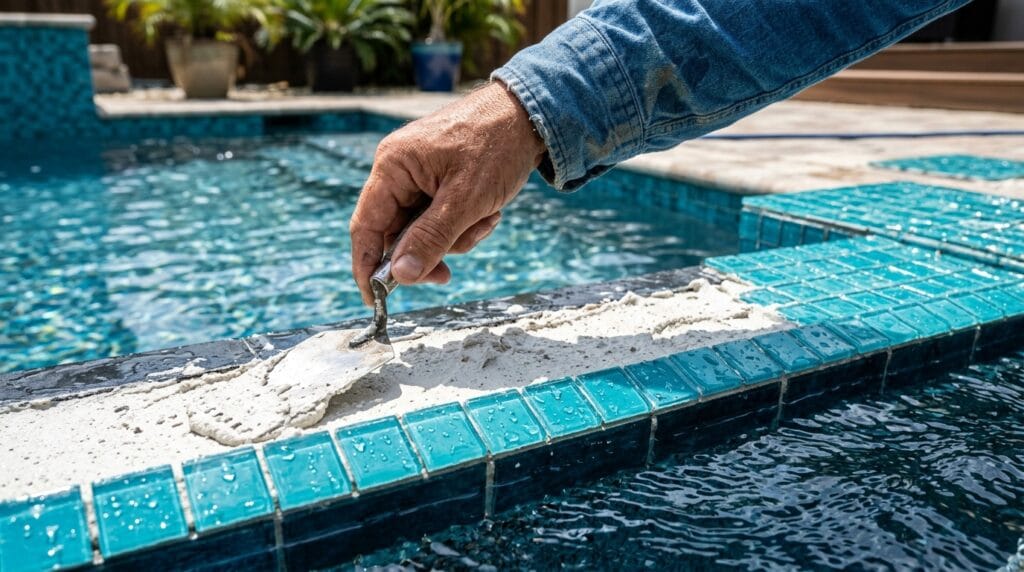
Your pool’s waterline tile is more than just a decorative accent; it is a vital barrier that protects your structure from calcium deposits and harsh weather. However, as tiles crack or begin to delaminate, homeowners must carefully weigh the pool tile replacement cost against the long-term value of a renovation. For most residential projects in 2026, you can expect to invest between $1,500 and $15,000 depending on the materials and scope of work.
Whether you are planning a simple waterline refresh at $25 to $30 per linear foot or a complete luxury overhaul, understanding the variables that drive pricing is essential for a successful project. From the durability of glass and porcelain to the labor-intensive process of full-pool retiling, every choice impacts your final estimate. Managing these expenses ensures you get the best aesthetic results without overextending your renovation budget.
Key Takeaways
- Standard waterline tile replacement in 2026 typically costs between $1,500 and $5,000, while a full luxury interior retiling can range from $15,000 to over $80,000.
- Material selection significantly impacts long-term value, with budget-friendly porcelain offering frost resistance and premium glass providing a non-porous, stain-resistant finish.
- Professional labor and structural preparation are critical expenses, as addressing underlying beam damage or using high-quality epoxy grouts prevents future tile failure and water infiltration.
- Waterline tiles serve as a vital protective barrier against calcium deposits and weather damage, making timely replacement essential for maintaining the pool’s structural integrity and property value.
Waterline Versus Full Interior Replacement Costs
The most significant factor in your budget will be the scope of the project, specifically whether you are updating the waterline or the entire pool interior. A standard waterline replacement focuses on the six inch decorative border that sits at the top of the pool wall. For most residential pools, this project averages between 25 and 30 dollars per linear foot, resulting in a total cost of 1,500 to 5,000 dollars. This is an effective way to modernize an aging pool without the financial commitment of a full scale remodel.
Full interior retiling represents a premium investment that transforms the pool into a luxury oasis. Instead of a simple plaster finish, the entire surface is covered in tile, which offers unmatched durability and a stunning aesthetic. This luxury interior retiling typically starts at 15,000 dollars and can exceed 80,000 dollars depending on the pool size and the materials selected. While the upfront cost is substantial, a fully tiled pool is much easier to clean and can last decades longer than traditional finishes.
Choosing between these two options often comes down to your long term goals and immediate budget constraints. A waterline update provides a quick face lift that addresses the most visible signs of wear and tear for a fraction of the price. Conversely, a full retiling project is a permanent solution that eliminates the need for frequent resurfacing and increases property value. Homeowners should weigh the 2026 average costs against their desire for a custom, high end finish that stands the test of time.
Material Price Comparison For Pool Tiles
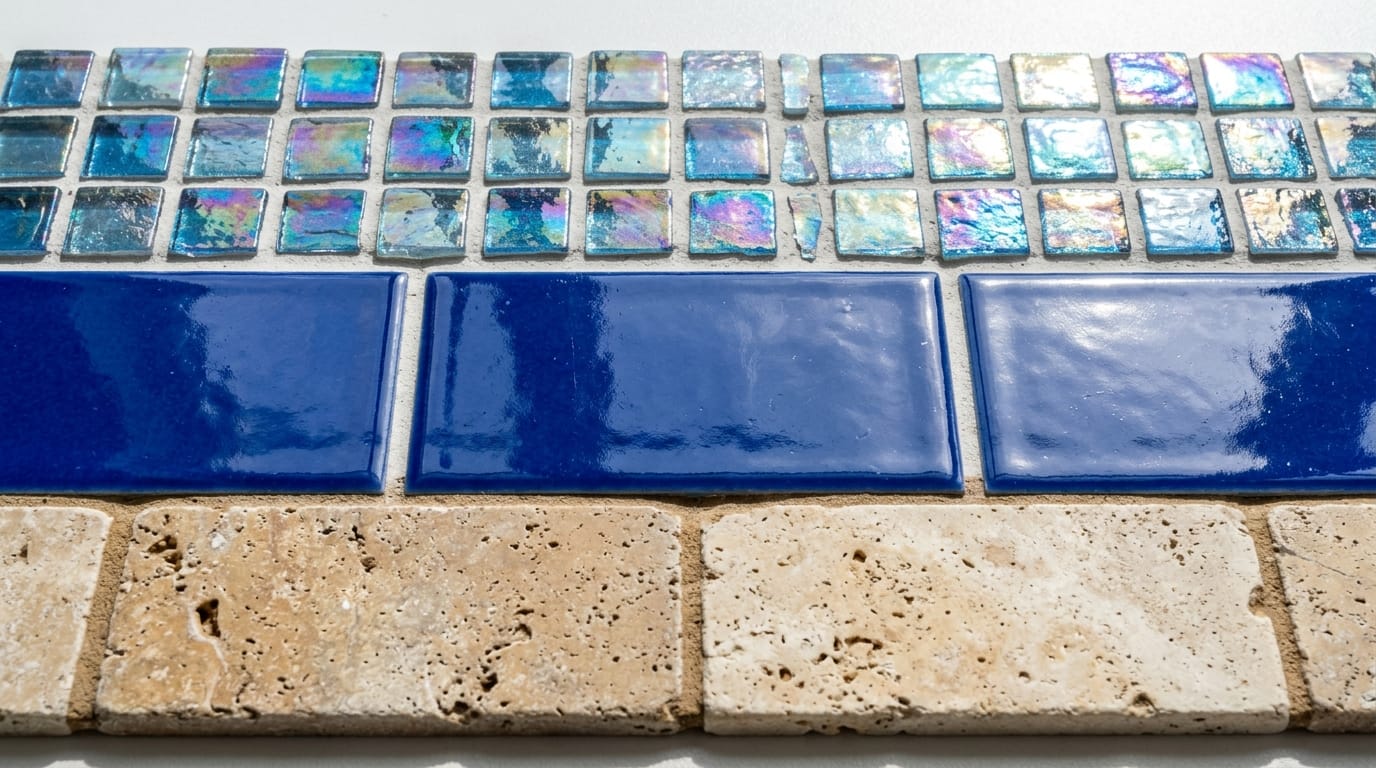
Standard ceramic and porcelain tiles remain the most budget-friendly options for homeowners looking to refresh their pool’s waterline without a massive financial commitment. These materials typically cost between $5 and $15 per square foot, offering a durable surface that resists chemicals and UV damage effectively. While ceramic is the traditional choice, porcelain is often preferred for its lower water absorption rate and superior frost resistance in colder climates. Both options provide an extensive array of colors and patterns, allowing for a customized look that fits within a modest renovation budget. Choosing these materials is an excellent way to bridge the gap between basic maintenance and a full-scale aesthetic remodel.
Glass tiles represent a premium upgrade that enhances the visual appeal and resale value of your property. Expect to pay anywhere from $20 to $50 per square foot for high-quality glass, which is prized for its translucent depth and ability to reflect sunlight across the water. Although the initial investment is higher, glass is non-porous and highly resistant to staining, fading, and chemical erosion over time. Installation for glass often requires specialized thin-set and more labor-intensive techniques, which should be factored into your overall project estimate. This material selection is ideal for those wanting a modern, shimmering finish that transforms the pool into a luxury pool finish and backyard centerpiece.
Natural stone tiles like travertine, slate, or granite offer a sophisticated and organic aesthetic for those seeking a high-end, earthy atmosphere. These materials generally range from $15 to $40 per square foot depending on the rarity of the stone and the complexity of the cut. While stone provides a unique texture and timeless beauty, it does require more consistent maintenance and periodic sealing to prevent water penetration and algae growth. Homeowners often choose stone to remodel pool coping to create a seamless transition between the pool interior and the surrounding deck or landscaping. Investing in natural stone ensures a custom look that feels integrated with the outdoor environment while providing a slip-resistant surface.
Labor Expenses And Structural Repair Additions
Beyond the price of the tiles themselves, professional labor fees typically account for a significant portion of your total project estimate. Skilled installers generally charge based on the linear footage for waterline work, but the complexity of your pool’s shape and the type of material selected can drive these rates higher. For a standard residential project in 2026, you can expect labor to integrate with the cost of materials to reach that $25 to $30 per linear foot average. Expert installation is vital because improper setting can lead to premature cracking or tiles popping off due to freeze and thaw cycles. Investing in experienced professionals ensures that the substrate is correctly handled and the finish is aesthetically level.
Hidden expenses often emerge during the surface preparation phase, which is necessary to ensure the new tile adheres properly to the pool shell. If your pool is older, contractors may discover that the underlying beam requires minor structural patching or leveling before any new decorative pieces can be laid. This prep work might include stripping away old mortar beds, repairing small cracks in the concrete, or applying waterproof membranes to prevent future leaks. These additions can add several hundred or even a few thousand dollars to the final invoice depending on the severity of the wear. Addressing these structural issues immediately is far more cost effective than ignoring them and facing a full scale remodel later.
The final touches of the project, such as re-grouting and sealing, also impact the overall budget while providing the necessary protection for your investment. Re-grouting alone can range from $3 to $10 per square foot if you are simply refreshing an existing installation, but it is a standard inclusion for a full replacement. Choosing high-quality epoxy grouts may increase the initial labor and material cost, yet these products offer superior resistance to pool chemicals and staining. Properly finished grout lines not only enhance the visual appeal of your waterline but also act as a vital protective barrier against water infiltration behind the tile. Checking for these specific line items in your quote will help you avoid surprises when it comes time to pay the final bill.
Budgeting for Your Pool Tile Investment
Managing the financial aspects of pool tile replacement requires a clear understanding of your project scope and long term goals. For most homeowners in 2026, a standard waterline tile refresh will range between $1,500 and $5,000, while a comprehensive full pool retiling can exceed $30,000 depending on the materials selected. While the initial investment for high quality ceramic or glass tile may seem significant, these durable options often provide better resistance to chemical wear and sun exposure. Balancing your immediate budget with the longevity of the materials ensures that your renovation adds lasting value to your property.
Choosing the right time to transition from minor repairs to a full aesthetic upgrade can save you thousands in recurring maintenance fees. Minor patching might solve immediate issues for a few thousand dollars, but consistent tile failure often signals that a more robust replacement is necessary for structural integrity. Investing in professional installation and premium grouting materials helps prevent future water seepage and tile popping, protecting your investment for years to come. To learn more about how best pool tile repair Los Angeles services can help you with pool tile replacement cost, explore our comprehensive solutions today.
Frequently Asked Questions
1. How much does it typically cost to replace pool waterline tile?
For most residential projects, you can expect to pay between $25 and $30 per linear foot. This usually translates to a total investment of $1,500 to $5,000 depending on the size of your pool.
2. What is the price range for a full interior pool retiling?
A complete interior retiling is a luxury upgrade that typically starts at $15,000 and can exceed $80,000. This premium option covers the entire surface of the pool in tile rather than plaster, providing unmatched durability and aesthetics.
3. Why is the price range for pool tile replacement so wide?
The total cost is driven by the scope of work and the materials you choose, such as glass or porcelain. Projects can range from a $1,500 waterline refresh to a $15,000 plus luxury overhaul depending on these variables.
4. Is it worth the investment to replace my pool tiles?
Yes, because your waterline tile acts as a vital barrier protecting the pool structure from calcium deposits and harsh weather. Replacing cracked or delaminating tiles prevents long term structural damage while increasing your property value.
5. What are the most popular material options for pool tiles?
Porcelain and glass are the most common choices for modern renovations. Porcelain offers a classic look and durability, while glass provides a high end, reflective aesthetic that impacts the final project estimate.
6. Can I just replace the waterline tile instead of the whole pool surface?
Absolutely, replacing just the six inch decorative border is an effective way to modernize your pool without a massive financial commitment. This targeted update allows you to refresh the look of your backyard for a fraction of the cost of a full remodel.