
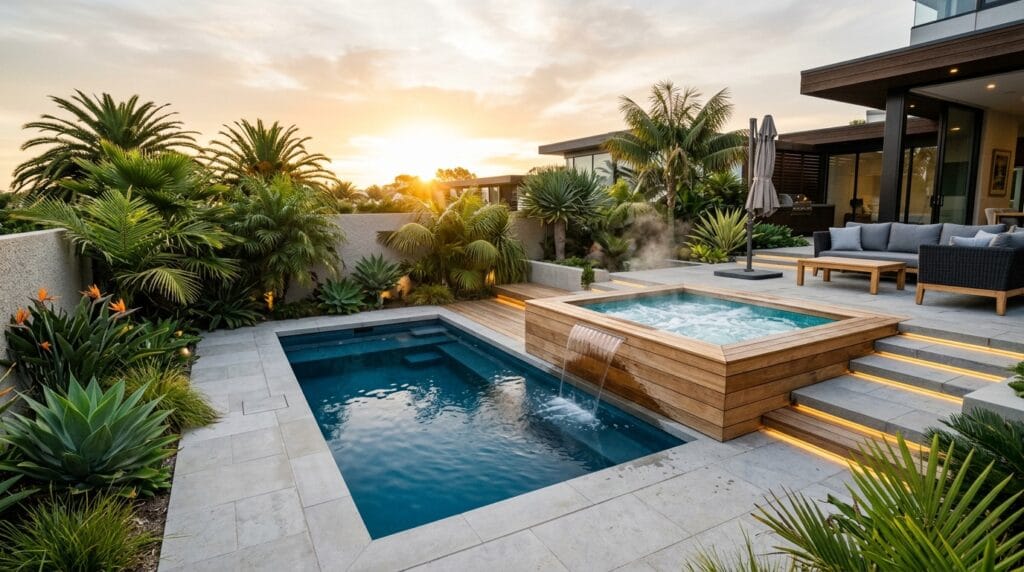
Deciding between a private oasis for relaxation and a functional aquatic retreat often comes down to the classic debate of a plunge pool vs spa. While one offers the intense, muscle-melting heat of a jet-powered soak, the other provides a deep, refreshing sanctuary for cooling off and low-impact movement. Choosing the right fit for your backyard depends on whether you prioritize therapeutic heat or a versatile space for wading and aesthetic appeal.
Recent innovations in temperature control and hybrid designs have blurred the lines between these two popular options, making the decision more nuanced than ever. Modern homeowners are no longer forced to choose strictly between ice-cold depths and bubbling heat, as advanced heating technology allows for a customized wellness experience. By evaluating your goals for hydrotherapy, maintenance, and year-round use, you can transform your outdoor space into a tailored sanctuary that meets your specific lifestyle needs.
Key Takeaways
- Choose a spa for targeted, high-pressure hydrotherapy and muscle recovery, or opt for a plunge pool to enjoy vertical freedom, full-body submersion, and low-impact movement.
- Plunge pools offer superior architectural integration and long-term property value, whereas portable spas prioritize thermal efficiency and rapid heat retention in a smaller footprint.
- Spas require more frequent chemical testing due to high heat and low water volume, while plunge pools offer a more stable chemical environment but require more robust filtration and higher heating costs.
- Modern hybrid designs now bridge the gap between both options by incorporating integrated seating and advanced heating technology into deeper pool shells for a versatile wellness experience.
Hydrotherapy Jets vs Refreshing Deep Water Wading
Deciding between a spa and a plunge pool often comes down to how you prefer to interact with the water on a physical level. A traditional spa is built around the concept of ergonomic, high pressure hydrotherapy where multiple jet configurations target specific muscle groups while you remain seated. These units are engineered for intense localized massage, using warm water and forceful aeration to alleviate tension in the back, neck, and legs. For homeowners seeking a dedicated recovery station for physical ailments or chronic stress, the focused intensity of spa seating provides a level of therapeutic precision that a standard pool cannot replicate.
Plunge pools offer a different sensory experience by prioritizing vertical freedom and open space over fixed seating. Because these pools are typically deeper than a hot tub, they allow for full body submersion and upright wading, which creates a feeling of weightlessness and buoyancy. This deep water environment is ideal for low impact stretching or simply cooling off without being confined to a molded plastic seat. While they may lack the aggressive massage jets of a spa, the volume of water provides a refreshing and versatile space that feels more like a private sanctuary for movement rather than just a place to sit.
The choice ultimately hinges on whether you value a mechanical massage or the flexibility of a compact aquatic retreat. Spas excel at providing a consistent and hot therapeutic soak, but their structured interiors can feel restrictive if you want to move around or play with the family. Plunge pools bridge the gap by offering enough room for several people to stand and socialize comfortably in a deeper, more aesthetically pleasing architectural feature. Modern temperature control technology now allows plunge pools to reach comfortable temperatures, making them a functional hybrid for those who want the depth of a pool with the intimacy of a smaller footprint.
Year-Round Heat Retention vs Aesthetic Architectural Integration
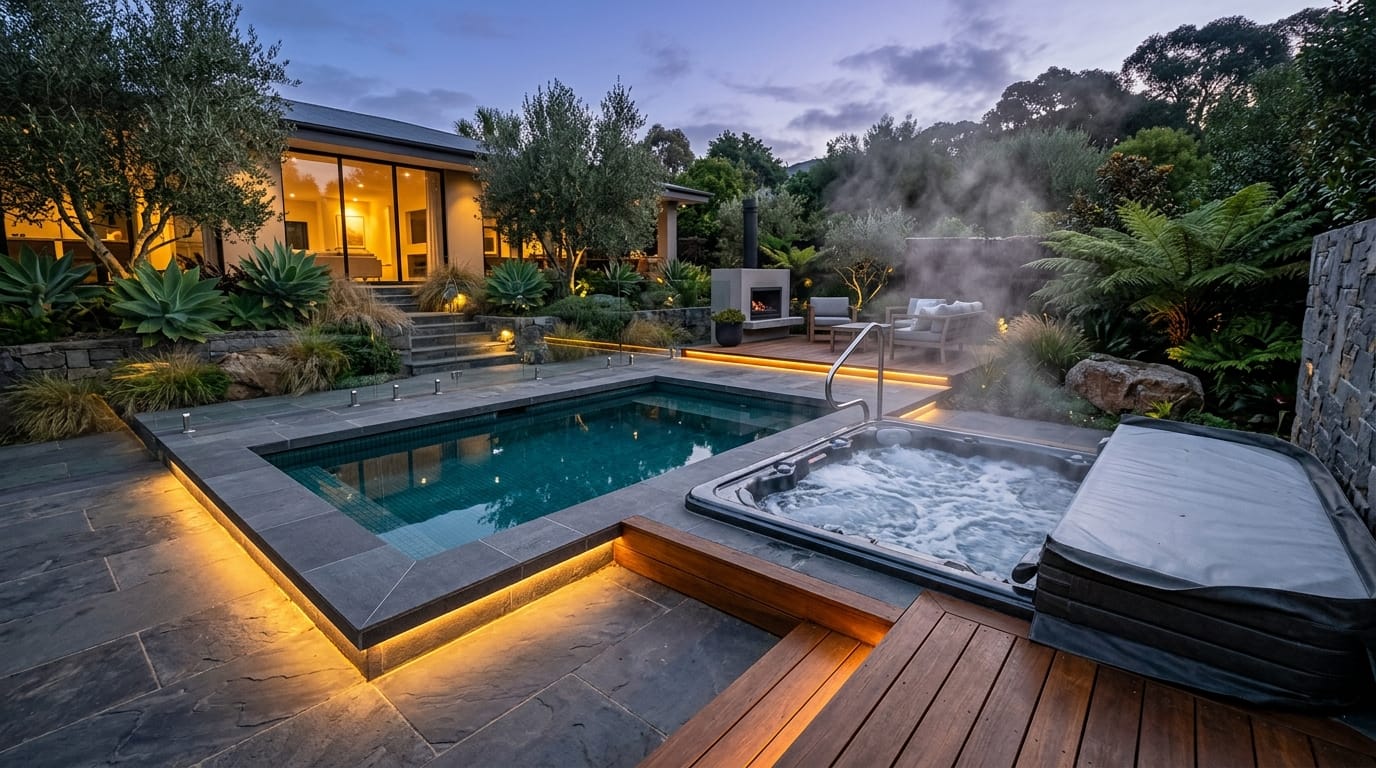
Choosing between a high temperature spa and a concrete plunge pool often comes down to the balance between immediate thermal comfort and long term architectural value. A traditional spa is engineered for rapid heat retention, utilizing thick insulation and custom covers to maintain water temperatures between 34 and 40 degrees Celsius. This makes them efficient for homeowners seeking daily hydrotherapy, as the smaller water volume requires less energy to keep at a constant, ready to use heat. However, the external cabinetry of a portable spa can sometimes feel like an afterthought in a carefully designed backyard, often sitting on top of the landscape rather than becoming a part of it.
Concrete plunge pools offer a more permanent solution that prioritizes aesthetic integration and structural durability. Because these pools are often built into the ground or finished with premium tiling, they function as a seamless extension of the home architecture rather than a temporary fixture. While they require more robust heating systems to reach spa like temperatures due to their larger surface area, they provide a versatile space for both cooling off in summer and soaking in winter. The visual impact of a stone or tile finish adds significant curb appeal, making the installation a long term investment in the property value.
Deciding which option fits your lifestyle involves weighing the convenience of a dedicated hot tub against the multi seasonal flexibility of a plunge pool. Modern hybrid designs are increasingly closing this gap, offering deep soaking depths and integrated seating that mimic the spa experience within a rigid pool shell. If your priority is a sleek, minimalist look that complements a small backyard, the architectural presence of a luxury infinity edge plunge pool is difficult to beat. Conversely, if you prioritize the lowest possible operational costs for high heat soaking, a dedicated spa remains a standard for thermal efficiency.
Maintenance Requirements and Long-Term Ownership Costs
Managing the chemical testing and balance in a traditional spa requires consistent attention due to the high water temperatures and low overall volume. Because bacteria thrive in warmer environments, hot tub owners must frequently test and adjust sanitizer levels to ensure the water remains safe for soaking. While the smaller volume means you use fewer chemicals by weight, the margin for error is much tighter, often necessitating weekly or even bi-weekly maintenance routines. Over the long term, the primary cost for spa owners involves the energy required to keep the water at therapeutic temperatures around the clock.
Plunge pools present a different set of maintenance demands because their larger water volume provides a more stable chemical environment. While they require more significant filtration systems and larger quantities of salt or chlorine to treat the water, they are generally less prone to rapid fluctuations in pH levels. The long term ownership costs for a plunge pool often hinge on your heating preferences, as keeping a larger body of water warm during winter can be more expensive than heating a compact spa. However, if used primarily as a cooling station in summer, the electrical demand for filtration remains relatively predictable and manageable.
Choosing between these two options involves weighing the frequency of chemical testing against the broader mechanical needs of larger pool equipment. A spa typically requires more frequent water chemistry management but has lower equipment replacement costs over time. In contrast, a plunge pool functions more like a traditional swimming pool, requiring more robust pumps and filters that represent a higher upfront investment and higher heating costs or occasional specialized servicing. Ultimately, homeowners must decide if they prefer the quick maintenance tasks of a high temperature spa or the more substantial but less frequent upkeep of a versatile plunge pool.
Choosing the Right Fit for Your Lifestyle
Ultimately, the choice between a plunge pool and a spa comes down to how you envision spending your time in your outdoor space. If your primary goal is targeted hydrotherapy, muscle recovery, and year round relaxation in high temperature water, a traditional in-ground spa installation is likely your best investment. These units excel in small footprints and provide a dedicated environment for seated stress relief. On the other hand, a plunge pool offers a more versatile aesthetic that doubles as a cooling station during hot summer months. It provides enough space for low impact wading or children to play, bridging the gap between a full sized swimming pool and a compact hot tub.
Property constraints and lifestyle preferences will dictate which of these aquatic features adds the most value to your daily routine. While spas are easier to maintain and operate at higher temperatures, plunge pools offer a more architectural look that can serve as a stunning focal point in a modern backyard. Recent hybrid models have further blurred these lines, allowing homeowners to enjoy the best of both worlds with integrated seating and advanced heating technology. No matter which direction you choose, the right installation can turn a cramped or underutilized yard into a private sanctuary for health and wellness.
Deciding on the perfect layout for a small backyard requires a professional eye to balance functionality with style. Professional backyard remodel services are designed to help you navigate these specific design challenges and select the water feature that best suits your terrain. Whether you prefer the therapeutic heat of a spa or the refreshing depth of a plunge pool, expert design teams can guide you through the entire installation process. Explore comprehensive solutions today to discover why they are so popular and how professional remodeling can transform your property into a functional outdoor retreat.
Frequently Asked Questions
1. What is the primary difference between a plunge pool and a spa?
The main difference lies in the physical experience and water depth. A spa focuses on high pressure hydrotherapy and ergonomic seating for muscle recovery, while a plunge pool offers deeper water for full body submersion and vertical movement.
2. Can a plunge pool be heated like a spa?
Yes, modern temperature control technology allows you to heat a plunge pool to comfortable levels. While they are traditionally used for cooling off, advanced heating systems now give you the flexibility to use them as a large, warm sanctuary throughout the year.
3. Which option is better for physical therapy and recovery?
If you require targeted massage for specific muscle groups, a spa with adjustable hydrotherapy jets is the superior choice. However, if your recovery needs involve low impact movement or the feeling of weightlessness, a plunge pool provides the necessary depth for upright wading.
4. Do plunge pools require more maintenance than spas?
Generally, plunge pools require slightly more maintenance due to their larger water volume and surface area. Because they lack the compact, self contained filtration systems found in many portable spas, you will need to monitor chemistry and debris more frequently.
5. Which choice adds more aesthetic value to a backyard?
Plunge pools are often viewed as a more seamless architectural feature that enhances the visual appeal of a landscape. Their larger footprint and deep, still water create a focal point that feels like a permanent aquatic retreat compared to the functional look of a standard spa.
6. Is it possible to get a hybrid of both a plunge pool and a spa?
Many modern designs now blur the lines by incorporating bench seating and jets into a larger plunge pool footprint. For those considering inground hot tub in backyard options, this allows you to enjoy the deep water and aesthetic beauty of a pool while still having access to the therapeutic benefits of a heated spa.