
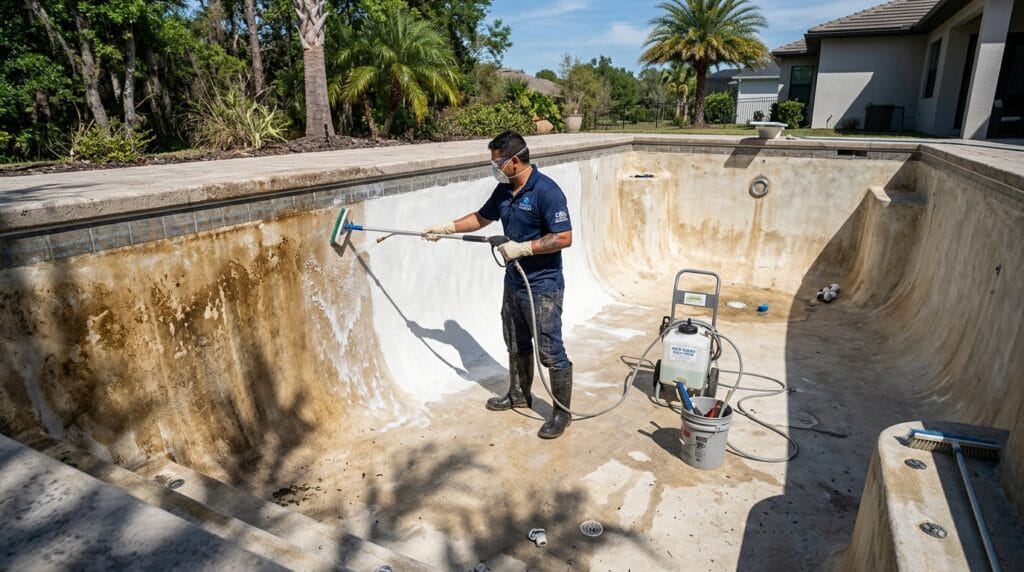
Is your once-sparkling oasis now marred by stubborn algae stains, rough calcium scaling, or a dull, weathered finish? When a standard scrub and chemical treatment fail to restore the luster of your plaster, it may be time for a professional drain and clean. Understanding the current pool acid wash cost is essential for homeowners planning a maintenance budget for the 2025–2026 season.
For most residential properties, a professional acid wash typically ranges from $250 to $1,500, with a national average landing between $450 and $600. This specialized process uses a diluted muriatic acid solution to carefully strip a micro-thin layer of plaster, revealing the bright, clean surface hidden beneath the grime. By pricing the project based on the pool’s square footage, you can ensure your backyard centerpiece returns to its pristine condition without unnecessary overspending.
Key Takeaways
- A professional residential acid wash typically costs between $450 and $600, with rates generally ranging from $0.60 to $0.70 per square foot.
- Acid washing serves as a cost-effective alternative to full resurfacing by stripping a micro-thin layer of plaster to remove deep-set stains, calcium scaling, and black algae.
- Total project budgets must account for logistical expenses beyond the service fee, including water drainage, refilling costs, and the essential chemical rebalancing of the new water.
- Commercial acid wash projects require a significantly higher investment, typically starting at $3,000 and exceeding $12,000 due to strict regulatory codes and massive surface areas.
National Average Pool Acid Wash Cost Estimates
Homeowners budgeting for professional pool restoration can expect a national average cost between $450 and $600 for a standard acid wash service. While the absolute price range typically spans from $250 to $1,500, the final invoice is largely determined by the total surface square footage of the pool interior. This specialized process, frequently referred to as a drain and clean, utilizes a diluted muriatic acid solution to carefully strip away a micro-thin layer of plaster. By removing this top layer, professionals can eliminate deep-set stains, stubborn calcium scaling, and persistent algae growth that standard chemicals cannot reach. Investing in this service effectively refreshes the aesthetic appeal of the property without the massive expense of a full resurfacing.
The specific dimensions of your swimming area play the most significant role in calculating your total investment for the 2025 to 2026 seasons. Most residential service providers charge between $0.60 and $0.70 per square foot for the combined cost of labor and specialized materials. For instance, a small ten by twenty foot pool might only cost between $120 and $170, while a medium fifteen by thirty foot pool generally falls between $270 and $350. Large residential installations measuring twenty by forty feet can reach prices between $480 and $600 depending on the severity of the staining. Understanding these square footage rates allows property owners to create an accurate budget before scheduling a professional technician to perform the work.
Commercial Pool Acid Wash Pricing Tiers
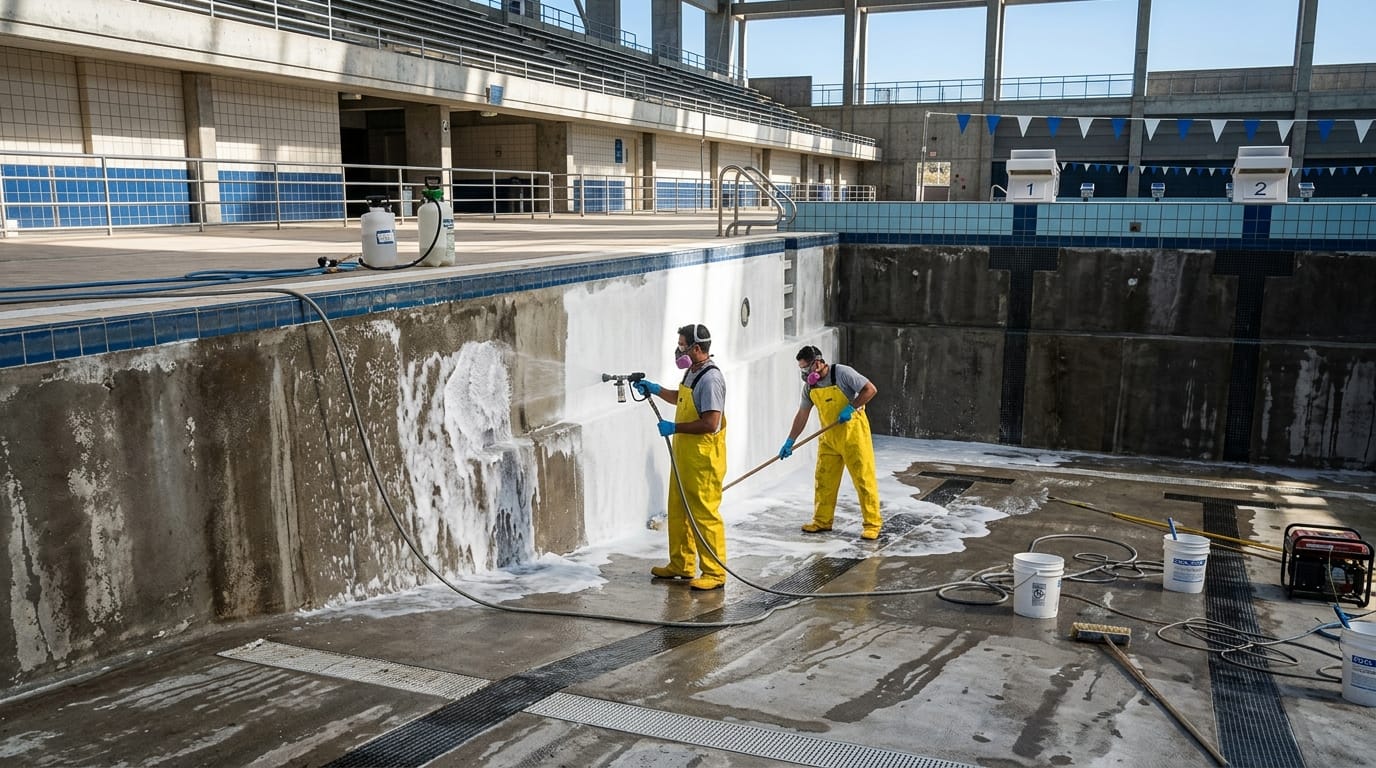
Commercial acid wash projects require a significantly larger investment than residential services because of the immense surface area and strict regulatory requirements involved. While a standard backyard pool might cost a few hundred dollars, commercial facilities like lap pools and community centers typically see pricing tiers starting at $3,000 and climbing well over $12,000. These costs are driven by the specialized equipment needed to manage high volumes of chemical runoff and the labor required to treat thousands of square feet of plaster. Facility managers must budget for these higher rates to ensure the job meets the regulatory standards expected for public use.
The complexity of commercial aquatic environments further increases the price point due to stringent health codes and safety protocols. Professional crews must use advanced neutralization systems to ensure that muriatic acid does not damage high-capacity drainage systems or violate local environmental laws. Large-scale resort pools often feature intricate designs, tanning ledges, and deep diving wells that require more time and precision during the application process. These factors necessitate a higher level of expertise and insurance coverage, which is reflected in the premium pricing for large-scale commercial contracts.
Timing and logistics also play a critical role in determining the final cost for professional resort-style facilities. Because these pools often serve hundreds of guests daily, contractors frequently work on tight schedules or during off-peak seasons to minimize operational downtime. The logistics of draining, scrubbing, and refilling a 100,000-gallon vessel require massive water management strategies that residential technicians simply do not encounter. When you account for the sheer volume of materials and the specialized labor force required, the $5,000 to $10,000 range becomes a standard baseline for maintaining a pristine and compliant commercial swimming environment. For facilities facing extreme wear, Commercial Pool Remodeling in Los Angeles may be necessary to address structural concerns beyond surface staining.
Factors Increasing Professional Surface Restoration Expenses
While the national average for a pool acid wash typically falls between $450 and $600, severe surface degradation can quickly push your estimate toward the higher end of the $1,500 range. Heavy calcium scaling is one of the most significant cost drivers because it requires a more concentrated muriatic acid solution and extended dwell times to dissolve the hardened mineral crust. Professionals must often perform multiple passes on stubborn areas, which significantly increases the volume of chemicals required and the total hours of labor billed. If your pool walls feel like sandpaper, you should budget for these additional material costs and the specialized scrubbing tools needed to restore a smooth finish.
The presence of biological contaminants like black algae also necessitates a more aggressive and expensive treatment plan compared to a standard cosmetic refresh. Black algae roots itself deep within the pores of the plaster, meaning a quick rinse will not prevent it from immediately returning once the pool is refilled. Technicians must spend extra time pre-treating these infestations with specialized algaecides and performing localized, high-concentration acid applications to ensure the roots are fully eradicated. This meticulous process ensures the longevity of the restoration but adds to the final bill due to the increased technical expertise and chemical intensity involved.
Stain severity plays a final, crucial role in determining whether your project stays near the base rate of $0.60 per square foot or climbs higher. Deeply set organic stains from decaying leaves or metallic discolorations from copper and iron require careful monitoring to avoid over-etching the plaster while attempting to lift the pigment. Because the goal is to remove only a micro-thin layer of the interior surface, a professional must balance speed with precision to prevent structural damage. Investing in this level of detailed restoration prevents the need for a full resurfacing job, which is a much more expensive alternative to a heavy-duty acid wash.
Additional Costs For Pool Drainage And Refilling
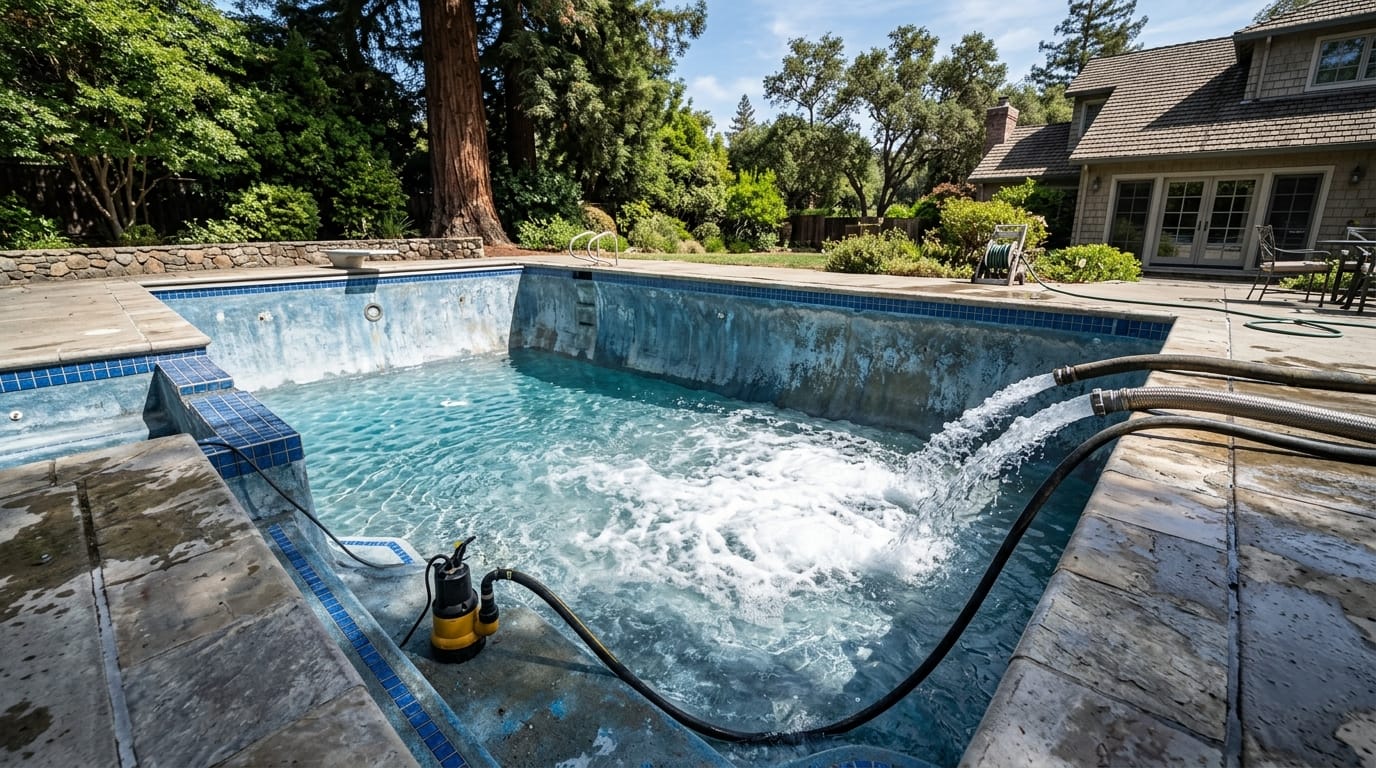
When budgeting for a professional acid wash, many homeowners overlook the logistical costs of removing thousands of gallons of water and then replenishing the pool. Professional drainage requires specialized submersible pumps and proper discharge routing to ensure your yard or local sewer system is not overwhelmed. Some municipalities require specific permits for drainage or charge disposal fees depending on how the water is handled. These initial steps are essential for a clean workspace but can add several hundred dollars to your total project invoice.
Once the surface stains are successfully stripped away, the cost to refill the pool becomes your next primary financial consideration. Depending on your local utility rates, refilling a standard residential pool can cost between $40 and $200 on your next water bill. In drought-prone regions or areas with high municipal surcharges, these fees can fluctuate significantly based on total gallonage. It is wise to contact your local water provider beforehand to see if they offer one-time credits for pool refills to help mitigate these utility spikes.
The final phase of the process involves a comprehensive chemical rebalancing to protect your freshly exposed plaster. Because you are starting with raw tap water, you must invest in a full suite of start-up chemicals including stabilizers, conditioners, and pH balancers. This chemical reset is vital for preventing immediate scale buildup or new staining on the pristine surface. Expect to spend an additional $50 to $150 on these initial treatments to ensure your investment remains protected and the water is safe for swimming. If the surface is too far gone for a simple wash, you may need to determine When Do I Need Pool Plastering in Los Angeles, CA? to properly restore the vessel.
Acid Wash Costs vs. Full Resurfacing
Deciding between a professional acid wash and a complete resurfacing is a vital financial choice for any pool owner. While a full remodel can cost several thousand dollars, a professional acid wash typically ranges from $250 to $1,500, offering a cost-effective alternative to strip away deep stains and calcium scaling. By investing in this drain and clean service, you effectively peel back a micro-thin layer of plaster to reveal a bright, fresh surface underneath. This maintenance step not only restores the aesthetic appeal of your backyard but also extends the functional life of your existing plaster. For most residential pools, the national average stays between $450 and $600, making it a budget-friendly alternative to more invasive construction.
Budgeting for this service requires a clear understanding of your pool’s specific dimensions and current condition. Learning how do you know when a pool needs resurfacing can help you determine if an acid wash is the right choice or if more extensive work is required. Most professionals charge between $0.60 and $0.70 per square foot, so a standard 15×30 medium pool usually falls into the $270 to $350 range for labor and materials. When planning your expenses, remember to account for the cost of refilling the water and rebalancing the chemicals once the process is complete. It is also wise to set aside a small contingency fund for any minor plaster repairs that may be uncovered once the pool is fully drained. Taking these factors into account ensures you can restore your pool’s beauty without any unexpected financial surprises.
Maintaining a pristine outdoor space is about more than just cleaning, as it often involves long-term planning for your property’s value. If your pool surface has reached a point where an acid wash is no longer sufficient, it might be time to consider how long does it take to resurface a pool and plan for a more comprehensive upgrade. Understanding the nuances of pool resurfacing vs replastering is designed to help you achieve your goals, whether you need a simple surface restoration or a complete aesthetic overhaul. Working with a pool renovation company is the best way to explore expert services today to discover how you can transform your outdoor living area into a stunning retreat.
Frequently Asked Questions
1. What is the average cost for a professional pool acid wash?
For the 2025 to 2026 season, you can expect to pay between $450 and $600 on average for a professional acid wash. While smaller projects may start as low as $250, larger or more complex pools can reach up to $1,500 depending on the total square footage.
2. How do professionals calculate the price of an acid wash?
Most service providers base your total investment on the interior surface area of your pool. You should budget between $0.60 and $0.70 per square foot for the combined labor and materials required to perform a standard drain and clean service.
3. What exactly does the acid wash process involve?
A professional acid wash involves draining the pool and applying a diluted muriatic acid solution to the plaster. This process carefully strips away a micro-thin layer of the surface to reveal a bright, clean finish underneath while removing deep-set stains and calcium scaling.
4. When is it necessary to choose an acid wash over standard cleaning?
You should consider an acid wash when your pool suffers from stubborn algae stains, rough calcium deposits, or a dull finish that does not respond to traditional scrubbing and chemicals. This service is a cost-effective alternative to a full resurfacing when the underlying plaster is still structurally sound.
5. What are the primary benefits of investing in an acid wash?
An acid wash effectively eliminates persistent organic stains and mineral buildup that regular maintenance cannot reach. By refreshing the aesthetic appeal of your plaster, you can restore your pool to its pristine condition without the massive expense of a complete renovation.
6. How often should I have my pool acid washed?
Because this process removes a thin layer of plaster, you should only perform an acid wash when it is truly necessary for stain removal. Frequent treatments can prematurely thin your pool lining, so it is best used as a restorative measure every few years rather than a routine maintenance task.