
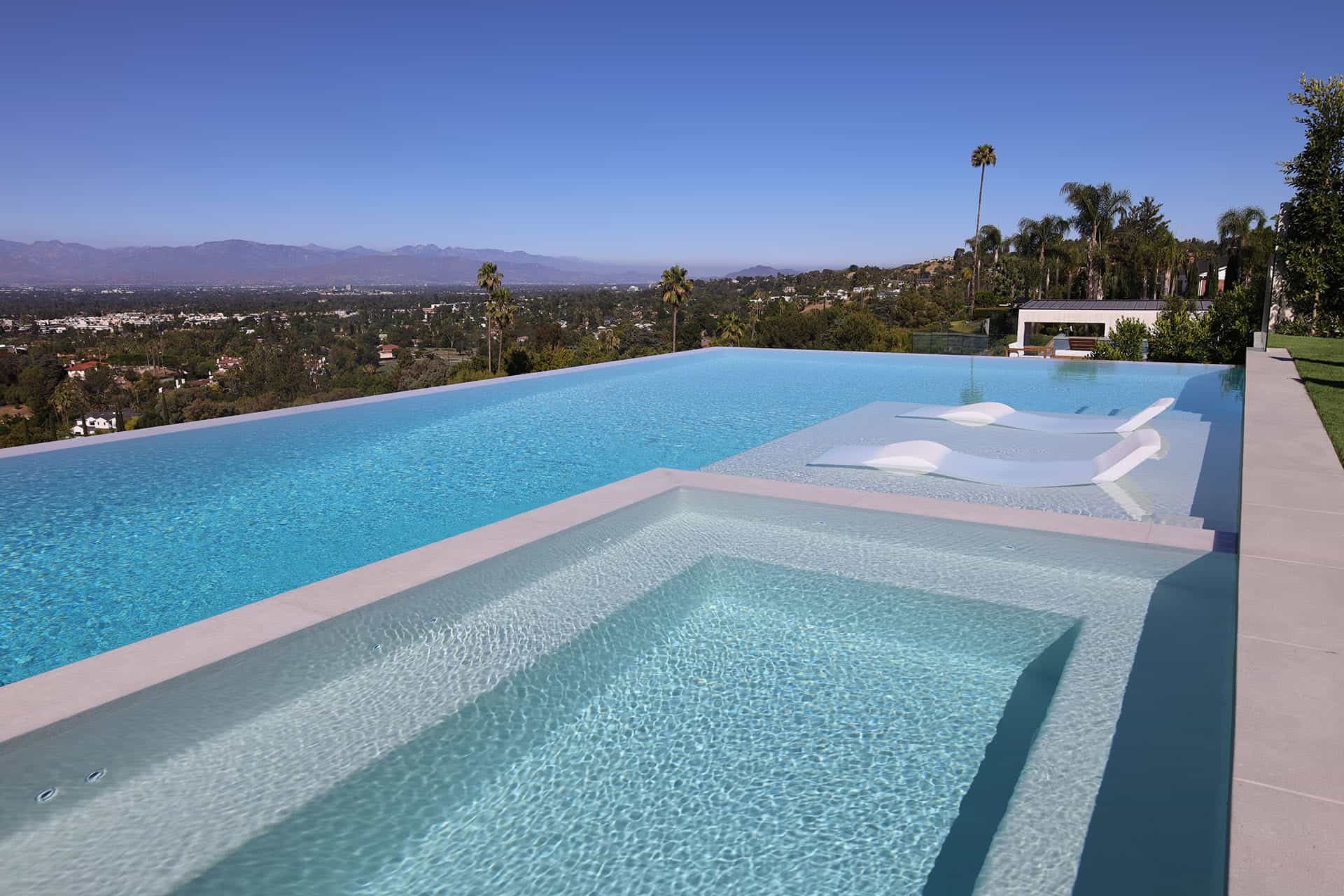
An infinity pool creates a breathtaking visual illusion where water seems to merge with the horizon, but achieving this vanishing edge requires precision engineering far beyond a standard build. Modern infinity pool structural requirements have become increasingly stringent to prevent common failures like soil settlement and inadequate drainage. Every millimeter of the weir wall must be perfectly level to maintain that signature glass-like surface.
Beyond the aesthetics, the structural integrity depends on a complex interplay between the main pool and its secondary catch basin. Engineers must now account for precise water-in-transit volumes and swimmer displacement to ensure the surge tank can handle the flow without overflowing. These sophisticated hydraulic systems and reinforced concrete structures are what transform a high-end design into a safe, permanent architectural landmark.
Key Takeaways
- The weir wall must be engineered to a strict tolerance of 1/16 inch to maintain a uniform water sheet and prevent the dry spots that ruin the vanishing edge illusion.
- Sophisticated hydraulic modeling is required to size surge tanks for ‘water-in-transit’ and bather displacement, ensuring the system manages volume fluctuations without overflowing or running dry.
- Vanishing edge designs must utilize heavy-duty steel reinforcement and specialized shotcrete to counteract asymmetric hydrostatic pressure caused by the lack of external soil support on the open side.
- Geotechnical surveys and site-specific foundations, such as deep piers or piles, are non-negotiable to prevent soil settlement and structural tilting on the steep slopes common for infinity pool installations.
Precision Weir Wall And Vanishing Edge Geometry
Achieving the signature glass-like water sheet of a high-end infinity pool requires an uncompromising commitment to mathematical precision during the structural phase. The weir wall serves as the primary focal point where engineering meets artistry, demanding a perfectly level finish to ensure water spills over the edge with absolute uniformity. Industry standards for luxury builds now dictate a strict tolerance of 1/16 inch across the entire span of the vanishing edge. Any deviation beyond this narrow margin can result in unsightly dry spots or uneven flow patterns that shatter the illusion of an endless horizon. Specialized masonry techniques and high-grade leveling equipment are essential to prevent these common failures in complex backyard terrains.
The structural integrity of the vanishing edge is further protected by the strategic selection of finishing materials and rigorous hydraulic calculations. When water flows over the weir wall, it creates a constant dynamic load that requires the underlying concrete to be reinforced against both pressure and potential soil settlement. Proper geometry ensures that the water sheet remains stable even when the pool is occupied by multiple swimmers, which adds to the displacement volume. This level of detail distinguishes a standard pool installation from a luxury infinity edge feature designed for long-term performance. By adhering to these exacting standards, homeowners can ensure their investment maintains its visual impact without the need for constant recalibration or structural repairs.
Catch Basin Capacity And Surge Tank Hydraulics
Precision engineering is the hallmark of a luxury infinity pool, particularly regarding the complex calculations required for the catch basin and surge tank. Unlike standard swimming pools, a vanishing edge system must account for water in transit, which is the specific volume of water required to coat the weir wall and fill the plumbing lines when the pumps are active. If the catch basin is undersized, the system will frequently run dry or fail to maintain the seamless glass-like surface that high-end clients expect. Engineers must meticulously calculate this volume based on the total length of the weir and the desired thickness of the water sheet. This ensures that the water level remains perfectly consistent regardless of whether the system is in a static or active state.
Bather load swimmer displacement represents another critical factor that separates professional aquatic engineering from standard residential construction. When multiple swimmers enter the pool, their body mass displaces a significant volume of water that must be immediately captured and stored by the surge tank. If the hydraulics are not designed to handle this sudden surcharge, the basin will overflow, leading to water waste and potential damage to the surrounding landscape. Top-tier builds utilize sophisticated hydraulic modeling to ensure the surge tank can accommodate maximum occupancy without compromising the mechanical systems. This level of foresight prevents the common failure points associated with amateur designs and ensures the structural longevity of the feature.
Maintaining a constant edge requires a delicate balance between pump flow rates and the storage capacity of the secondary collection structure. Modern standards dictate that the surge tank must be large enough to prevent the pump from sucking air during the initial startup phase when water is moving from the pool to the basin. Proper hydraulic design also incorporates automated leveling systems that monitor these fluctuations in real time to prevent equipment strain. For homeowners with challenging terrain, these structural requirements are non-negotiable to ensure the pool remains a stable and permanent fixture of the estate. Investing in these advanced engineering specifications ensures a superior build quality that can withstand both environmental pressures and heavy usage.
Asymmetric Loading And Soil Settlement Mitigation
Building a luxury infinity pool requires a sophisticated understanding of asymmetric hydrostatic pressure. In a standard pool, the weight of the water is countered by the surrounding earth on all sides, creating a balanced state of resistance. However, the vanishing edge design removes this external soil reinforcement on at least one side, forcing the concrete weir wall to bear the full force of the water alone. To prevent structural failure or bowing, engineers must utilize heavy-duty steel reinforcement and specialized shotcrete applications that far exceed standard residential specifications. These advanced reinforcements ensure the vessel remains rigid and secure even when the internal pressure is completely unbalanced.
Geotechnical surveys are a non-negotiable prerequisite for any high-end hillside installation to mitigate the risk of soil settlement. Because these pools are often perched on slopes to maximize views, the weight of the water can cause the ground to shift if the foundation is not properly anchored. A professional soil analysis identifies the load-bearing capacity of the terrain and determines if deep piers or piles are necessary to reach stable bedrock. Without this precise data, even a minor shift in the earth can cause the weir wall to tilt, which ruins the vanishing edge effect and risks catastrophic cracking. Investing in these sloped backyard pools and comprehensive site evaluations protects the long-term integrity of the architectural feature.
The structural complexity of these builds serves as a natural filter for discerning homeowners who prioritize engineering excellence over speed. Modern standards emphasize that the catch basin and the main pool must act as a unified system while allowing for independent movement through expansion joints. This dual structure approach prevents the differential settlement that often plagues lesser builds where the surge tank is treated as an afterthought. By addressing these asymmetric forces through rigorous engineering and site-specific data, builders can create a seamless aquatic horizon that remains perfectly level for decades. This level of technical precision defines a true luxury installation and ensures the safety of the surrounding landscape.
Engineering Structural Integrity for Vanishing Edges
Ultimately, the architectural allure of a vanishing edge is only as permanent as the engineering beneath the surface. Investing in a high-end infinity pool requires a commitment to rigorous structural standards that far exceed those of traditional pool construction. Because these features often sit on steep hillsides or complex terrain, the structural integrity of the weir wall and catch basin must be absolute to prevent settling or catastrophic failure. Prioritizing these complex engineering requirements ensures that your investment remains a safe, functional, and breathtaking centerpiece for decades.
A meticulously engineered pool protects the long-term value of your property by mitigating the risks associated with soil movement and hydraulic pressure. Modern standards for water in transit and surge tank capacity are non-negotiable for homeowners who demand a seamless visual effect without mechanical issues. When precision leveling is combined with a robust concrete shell, the result is a sophisticated aquatic feature that performs as beautifully as it looks. If you are ready to elevate your outdoor living space with expert precision, explore professional backyard remodel services from a pool contractor in Los Angeles to discover how to manage the complexities of luxury pool construction.
Frequently Asked Questions
1. What is the acceptable tolerance for a weir wall level?
To achieve a perfect glass-like water surface, professional builders adhere to a strict tolerance of 1/16 inch across the entire span of the vanishing edge. Any deviation larger than this can cause uneven flow or dry spots that break the visual illusion of the horizon.
2. Why is the catch basin or surge tank so critical to the design?
The catch basin acts as a secondary reservoir that manages water in transit and swimmer displacement. These systems are engineered to handle specific hydraulic volumes so the pool maintains its level while preventing the lower tank from overflowing during heavy use.
3. How do you prevent structural failures like soil settlement?
Engineers utilize reinforced concrete structures and site-specific engineering to account for the unique pressure of complex backyard terrains. These precision methods ensure the pool remains a permanent architectural landmark by resisting the natural shifts in the ground below.
4. What happens if the weir wall is not perfectly level?
A weir wall that lacks mathematical precision will result in an inconsistent water sheet where some areas spill over while others remain dry. This ruins the vanishing edge effect and indicates a failure in the structural leveling phase of construction.
5. What kind of hydraulic calculations are required for these pools?
Engineers perform complex calculations to determine the exact flow rates needed to sustain a continuous spillover. Calculations must account for the dynamic load of moving water and the capacity of the surge tank to ensure the system operates efficiently under all conditions.
6. Are infinity pools more structurally demanding than standard pools?
Yes, infinity pools require significantly more precision engineering because they rely on a constant overflow system. The interplay between the main pool, the weir wall, and the collection basin demands higher-grade materials and more rigorous construction standards than a traditional build.