
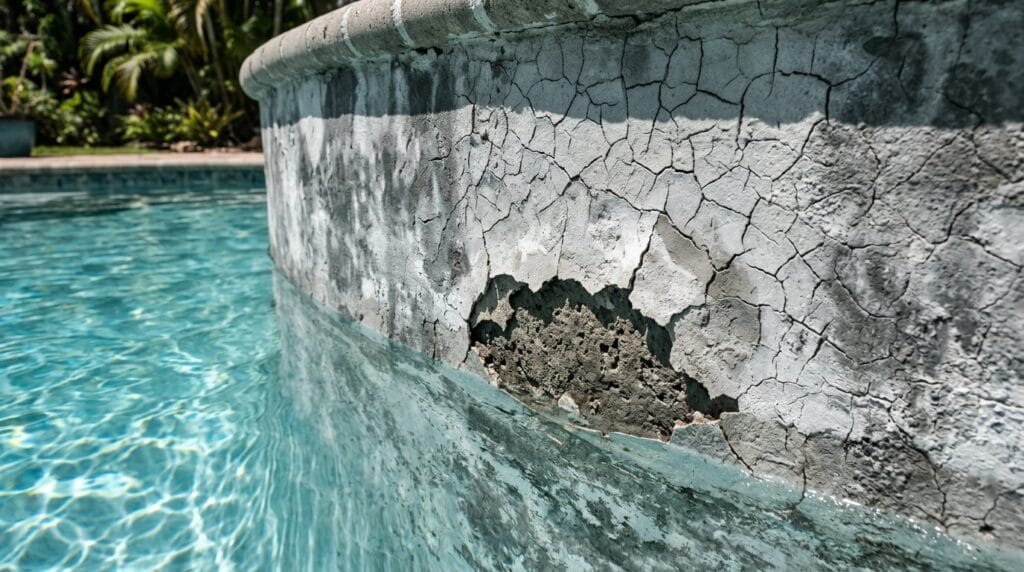
Your swimming pool’s plaster is more than just a smooth finish; it is the vital sacrificial layer that protects your pool’s structural integrity from constant water exposure. Most concrete and gunite pools require a refresh every 7 to 10 years to prevent leaks and costly damage to the underlying shell. However, falling victim to common pool replastering mistakes can turn this essential maintenance project into a financial nightmare.
The most frequent errors often begin before the new material even touches the surface, typically stemming from rushed preparation or poor bonding techniques. When old, degraded layers aren’t properly removed or the substrate isn’t meticulously cleaned, you risk delamination and hollow spots that can ruin your investment in months. Understanding these pitfalls is the only way to ensure your pool remains a watertight sanctuary for another decade.
Key Takeaways
- Concrete and gunite pools require replastering every 7 to 10 years to maintain a sacrificial waterproof barrier and prevent costly structural damage to the underlying shell.
- Meticulous substrate preparation, including a complete chip-out or acid wash, is the most critical step for ensuring a permanent mechanical bond and preventing delamination.
- Environmental conditions must be strictly controlled during application, as extreme heat or freezing temperatures can cause premature cracking and shatter the bond between the plaster and the concrete.
- The first 28 days of water chemistry management are vital for the curing process, as improper pH or calcium levels will lead to permanent scaling, etching, and staining.
Failing To Perform Proper Substrate Preparation
The foundation of a successful pool renovation lies entirely in the quality of the substrate preparation before a single drop of new plaster is applied. Many inexperienced contractors or homeowners make the mistake of applying a fresh coat over old, degraded material or a shell that has not been deeply cleaned. Without removing loose debris, oils, and mineral deposits, the new finish simply cannot form a mechanical bond with the underlying concrete. This oversight creates weak points across the pool surface that inevitably lead to premature failure. Skipping these essential steps might save time during the initial application, but it sets the stage for a complete structural breakdown of the finish.
When the bond between the new plaster and the pool shell is compromised by poor preparation, the most common result is delamination. This occurs when the top layer physically separates from the substrate, creating unsightly peeling and large hollow spots that can be felt underfoot. These air gaps are more than just a cosmetic nuisance, as they often trap water and lead to cracks or significant leaks over time. Once delamination begins, the only real solution is to strip the surface and start the entire process over again. Investing in professional preparation ensures that the transition between the old shell and new finish is seamless and secure.
Homeowners who prioritize a long-lasting finish must understand that a thorough acid wash or a complete chip-out of old layers is non-negotiable. Professionals use specialized equipment to ensure the surface is etched and porous enough to grip the new plaster for decades of use. Failing to address the integrity of the substrate often results in a finish that lasts only a fraction of its expected seven to ten year lifespan. By choosing a team that emphasizes meticulous cleaning and surface scoring, you protect your investment from the costly cycle of constant repairs. A high-quality bond is the only way to guarantee that your pool remains watertight and structurally sound for the long haul.
Ignoring Environmental Factors and Temperature Extremes
Timing is everything when it comes to the delicate curing process of new pool plaster. Many property owners make the mistake of scheduling a resurfacing project during the peak of summer or the dead of winter without considering how these extremes affect the material. High temperatures and direct sunlight cause the moisture in the plaster to evaporate far too quickly, leading to shrinkage cracks known as crazing. Once these tiny fissures develop, the structural integrity of the finish is permanently compromised before the pool is even filled. Professional installers understand that maintaining a controlled environment is the only way to ensure the plaster sets properly and achieves its intended lifespan.
Freezing temperatures present an equally dangerous set of risks for a fresh pool finish. If the water within the plaster mix freezes before it has fully cured, the expanding ice crystals will shatter the bond between the new layer and the concrete shell. This often results in delamination, where large sections of the plaster eventually peel away from the pool walls. These environmental failures are not just cosmetic issues, as they frequently lead to hidden leaks and expensive structural damage to the underlying gunite. Choosing a professional team that monitors local climate patterns and uses protective measures like shading or timing is essential for a successful renovation.
Neglecting Post-Application Water Chemistry Balance
The first 28 days after applying new plaster are the most critical for the long term health and appearance of your pool. Many homeowners mistakenly believe that once the water is back in the pool, the hard work is over and maintenance can return to a standard schedule. In reality, the curing process is a complex chemical reaction that requires constant monitoring and precise adjustments to the water chemistry management. Failing to follow a strict startup protocol can cause the plaster to cure unevenly, leading to permanent structural and aesthetic flaws. This oversight often results in a finish that looks aged and worn within just a few weeks of completion.
Improper chemical balancing during this window frequently leads to aggressive scaling or deep, irreversible staining on the new surface. If the calcium hardness or pH levels are not meticulously managed, minerals can precipitate out of the water and bond to the fresh plaster in a white, crusty layer. Conversely, water that is too acidic will leach minerals directly from the new finish, causing a rough texture known as etching. These issues are not merely cosmetic, as they compromise the sacrificial layer that protects your pool shell from leaks and structural degradation. Once these stains and scales set in, they often require harsh acid washes or even another full replaster to correct.
Choosing a professional team ensures that these technical startup procedures are handled with the specialized equipment and expertise they require. Our professionals understand the delicate relationship between water alkalinity and the curing rate of new cementitious finishes. By entrusting your pool to experts, you avoid the common pitfalls of DIY chemistry that often ruin expensive renovations. We provide the precise oversight needed to safeguard your investment, ensuring the finish remains smooth, vibrant, and durable for its full expected lifespan. Professional management is the only way to guarantee that your new plaster cures into the resilient, beautiful barrier your pool deserves.
Avoiding Costly Amateur Replastering Errors
Ultimately, pool replastering is a high-stakes project where the margin for error is incredibly slim. While the temptation to treat this as a weekend DIY task is understandable, the technical requirements for surface preparation and chemical balancing are often far beyond the reach of an amateur. Small oversights during the bonding process or improper curing can lead to delamination, persistent leaks, and structural degradation that costs thousands to repair. By choosing to work with seasoned professionals, you ensure that your pool receives the precise application necessary for a finish that lasts a decade or more.
Investing in a professional finish is about more than just aesthetics; it is about protecting the structural integrity of your home. Experts bring specialized equipment and years of experience to handle the nuances of gunite and concrete shells, ensuring the plaster acts as a perfect waterproof seal. Understanding the nuances of resurfacing vs replastering can help you decide which material is best for your specific shell type. This professional oversight eliminates the risk of hollow spots and premature peeling that frequently plague inexperienced installations. When you prioritize quality craftsmanship, you gain peace of mind knowing your backyard oasis is both beautiful and built to withstand the test of time.
If you are ready to ensure your renovation is handled with the highest level of care and precision, it is time to consult with the experts. Avoiding common pitfalls is easy when you have a dedicated team managing every technical detail of the process. Discover how our backyard remodel services in Los Angeles can help you achieve a flawless pool finish and transform your outdoor living space into a durable masterpiece. Take the first step toward a worry-free renovation by exploring our comprehensive solutions today and learning how long does it take to resurface a pool properly.
Frequently Asked Questions
1. How often does a concrete or gunite pool actually need to be replastered?
You should plan to replaster your pool every 7 to 10 years to maintain its structural integrity. This sacrificial layer protects the underlying shell from water damage and prevents expensive leaks from developing over time.
2. What is the most common cause of plaster failure shortly after a renovation?
The most frequent cause of failure is improper substrate preparation, such as failing to remove old debris or mineral deposits. When the surface is not meticulously cleaned, the new plaster cannot form a mechanical bond, leading to premature breakdown.
3. What are the signs that my new pool plaster is delaminating?
You will notice physical peeling of the top layer or large hollow spots that you can feel under your feet while walking in the pool. These air gaps indicate that the new finish has physically separated from the underlying concrete shell.
4. Why is it a mistake to skip the removal of old, degraded plaster layers?
Applying a fresh coat over degraded material prevents a secure bond and creates weak points throughout the pool surface. This shortcut might save time initially, but it almost guarantees a financial nightmare when the entire finish fails a few months later.
5. Can I save money by doing the substrate preparation myself?
While DIY prep is possible, it is often where the most critical mistakes happen because inexperienced hands may miss oils or loose debris. A professional ensures the shell is perfectly prepped to protect your investment for another decade.
6. What happens if I ignore the need for replastering for too long?
Delaying this essential maintenance allows water to penetrate the protective layer and reach the structural shell of the pool. Knowing when a pool needs resurfacing is vital, as constant exposure can lead to significant structural damage and costly repairs that far exceed the price of a standard pool plastering job.