
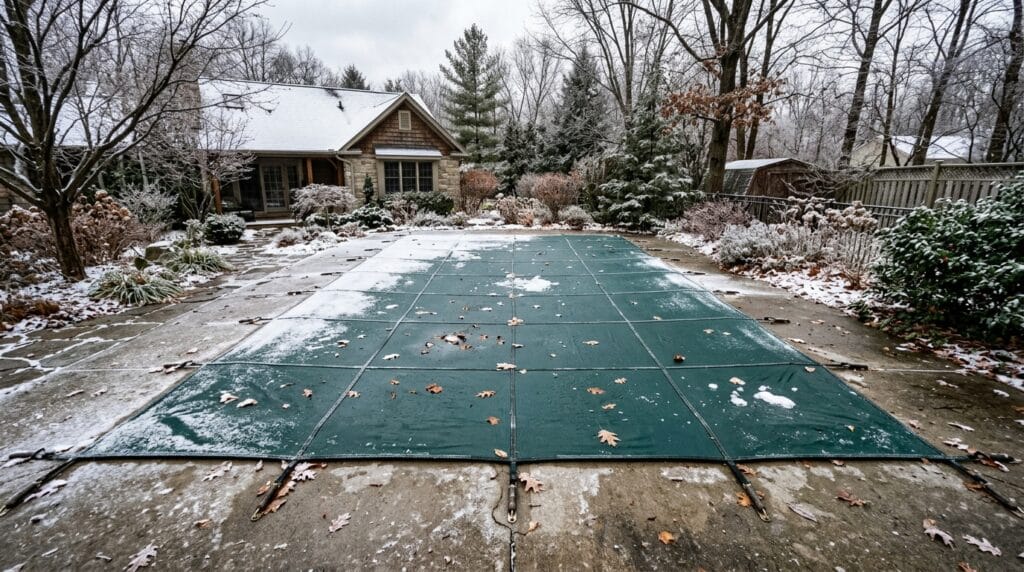
Choosing among winter pool cover types can affect pool safety, cleanup, and reopening costs when spring arrives. Solid tarps, mesh covers, and safety covers each handle debris, water, sunlight, and accidental access differently. The right option depends on your pool design, budget, local weather, and preferred level of off-season maintenance.
A winter cover is designed mainly to protect a closed pool. It is not a replacement for a solar blanket and does not significantly reduce winter evaporation. Understanding the trade-offs involving cost, durability, drainage, light control, and safety makes it easier to choose a cover that fits your pool and provides dependable protection until swim season returns.
Key Takeaways
- Choose a winter pool cover based on your pool design, climate, safety needs, and preferred maintenance level—not just the upfront price. Basic tarps suit some above-ground pools, while properly anchored safety covers are generally better for in-ground pools and households with children or pets.
- Basic solid tarps block sunlight and debris at a low cost but can collect water, deteriorate in harsh weather, and should never be treated as safety barriers. Mesh safety covers drain rain and snow to simplify spring opening, while solid safety covers provide stronger light and debris protection but require water removal.
- Hybrid covers balance the drainage benefits of mesh with the light and debris control of solid materials, making them useful for wet climates or properties with heavy foliage. Select the design based on snowfall, storms, nearby trees, and how much spring cleanup you want to perform.
- Professional measuring and installation improve fit, anchor placement, tension, durability, and safety—especially for irregular pools, attached spas, raised walls, and complex deck layouts. Review warranties, maintenance requirements, storage, water-level guidance, and post-storm procedures before purchasing.
Winter Pool Cover Types Introduction
Winter pool cover types are designed to protect a closed pool from leaves, dirt, algae-promoting sunlight, harsh weather, and accidental access during the off-season. A basic solid tarp is often the most economical option for an above-ground pool, but it typically is not designed to support a person and may allow water to collect on top. Mesh safety covers let rain and melted snow pass through while blocking most debris and sunlight, reducing the need for pumping and simplifying spring opening. Solid safety covers provide a more complete barrier against sunlight and contaminants, although they generally require a way to remove accumulated water. The right choice depends on whether your priority is basic seasonal protection, easier maintenance, or a certified safety barrier.
Winter covers should not be confused with solar or thermal blankets, which are lightweight covers intended for frequent use during the swimming season. Solar blankets help retain heat and reduce evaporation, but they are not designed for winter weather, heavy debris, or access protection. For in-ground pools, custom mesh or solid safety covers are commonly secured with anchors installed around the pool perimeter, while above-ground pools may use cable-and-winch systems or fitted tarp-style covers. The pool’s shape, coping, deck construction, and nearby landscaping can all affect fit and installation requirements. Professional measuring and installation can help ensure the cover remains properly tensioned and the anchoring system performs as intended.
Climate and household safety needs should guide the final selection as much as the purchase price. Areas with heavy snowfall, frequent storms, or significant leaf fall may require a stronger cover system and a reliable water removal plan, while mild climates may place greater emphasis on debris control and algae prevention. Families with children or pets should prioritize a properly rated safety cover rather than treating a basic tarp as a barrier. Before scheduling seasonal service, ask about material durability, warranty coverage, anchor condition, storage, and spring removal. Choosing the appropriate winter pool cover types in advance can protect the pool more effectively and make reopening faster and less costly.
Basic Winter Pool Tarps
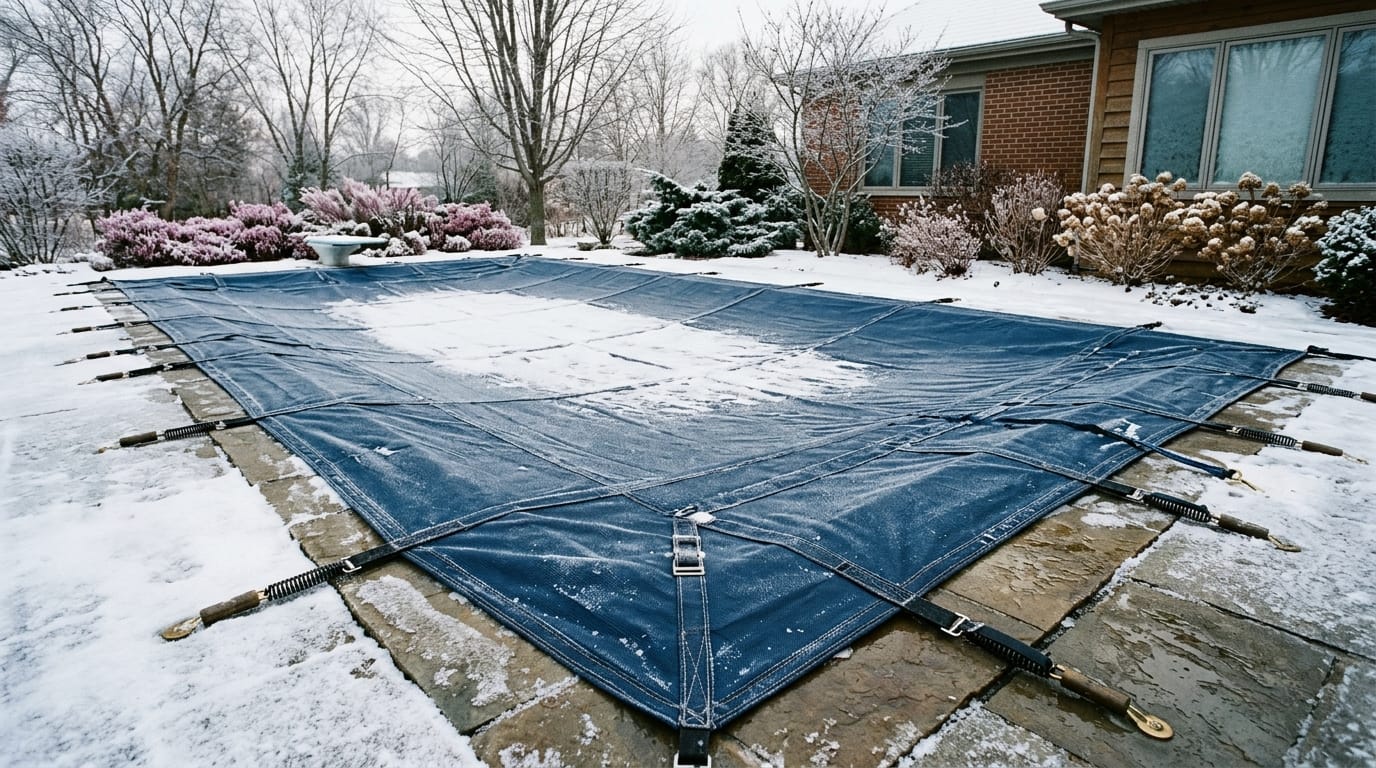
Basic solid winter tarps are a common choice for above-ground pools and simple seasonal closures because they have a low upfront cost and are easy to install. Their opaque material blocks sunlight, which can help limit algae growth while the pool is closed, and keeps leaves and larger debris out of the water. However, these covers are typically lightweight and may tear, stretch, or deteriorate when exposed to wind, ice, snow, and repeated handling. They also require proper support and regular attention because rain and melting snow can collect on top, creating excess weight and making removal more difficult.
A basic tarp should not be treated as a dependable safety barrier for children, pets, or anyone who may accidentally approach the closed pool. Even when secured with cables, clips, or water tubes, it generally is not engineered to support a person or provide the anchored protection of a professionally installed safety cover. Homeowners comparing winter pool cover types should weigh the short-term savings against the risk of premature replacement, water management, and limited protection from accidental access. For in-ground pools or households prioritizing reliable safety and a smoother spring opening, a professionally measured and installed safety cover is usually the more appropriate investment.
Mesh Safety Cover Advantages
Mesh safety covers are secured around in-ground, on-ground, and some semi-permanent pools with perimeter anchors and tensioned springs. This installation keeps the cover snug across the pool while creating a strong barrier against accidental access when the pool is closed. The woven fabric allows rain and melted snow to drain through, so water does not collect heavily on top of the cover. As a result, mesh covers are generally lighter to handle and require less pumping during spring opening than solid covers.
Their practical design makes mesh safety covers a strong choice for homeowners seeking dependable winter protection with easier seasonal maintenance. However, the fabric can allow fine debris and some sunlight to pass through, which may contribute to spring water discoloration, algae growth, or reduced clarity if the pool is not properly balanced and winterized. A professional installer can confirm anchor placement, spring tension, and fit for the pool’s shape and surrounding deck. Choosing a quality cover and arranging installation before winter helps ensure the safety system performs as intended throughout the off-season.
Solid And Hybrid Safety Covers
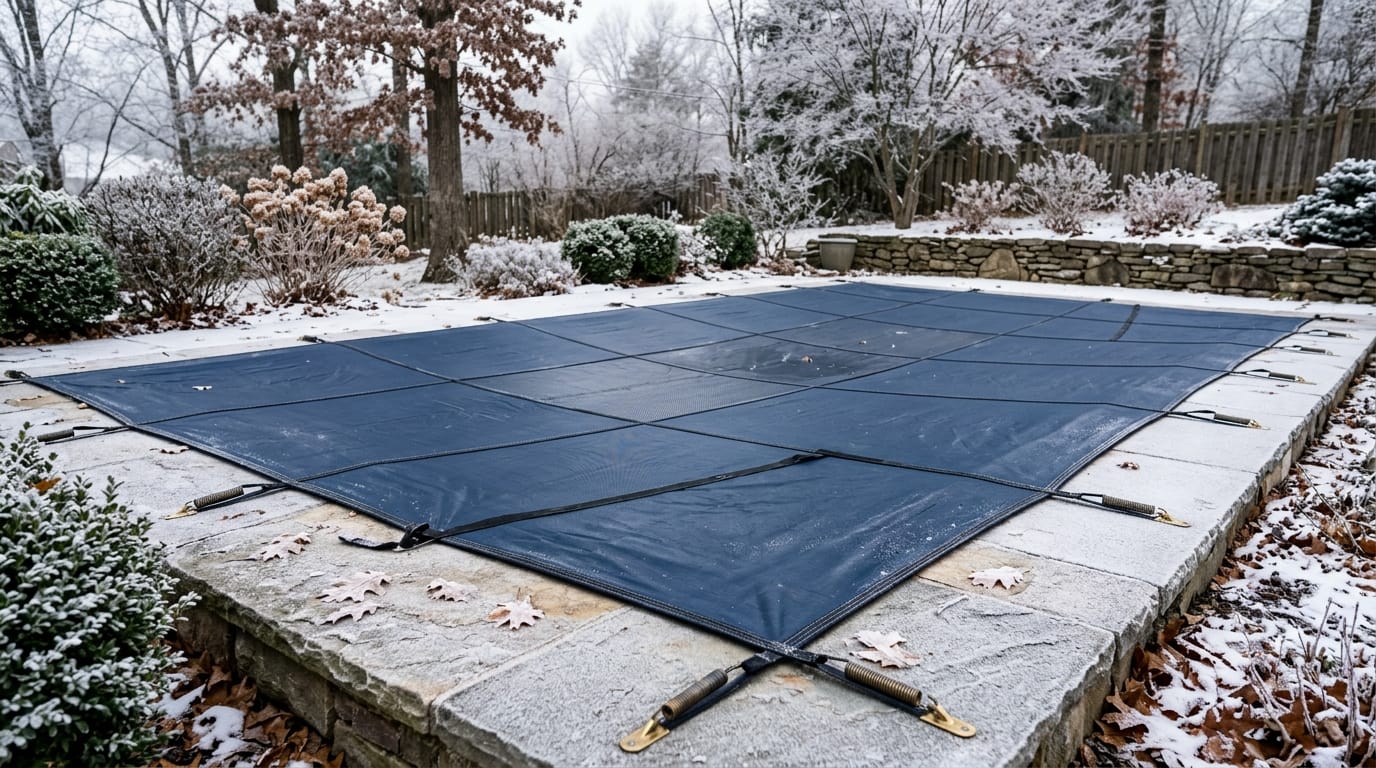
Solid safety covers create a strong barrier against sunlight, rain, snow, leaves, and other debris during the off-season. By blocking nearly all light, they can help limit algae growth and reduce the amount of cleanup needed at spring opening. Their tightly woven construction also offers dependable protection against accidental access when properly anchored to the pool deck. Because water cannot pass through the cover, solid designs need built-in drainage panels or a cover pump to prevent standing water from accumulating. Professional measurement and installation are especially important to ensure the cover remains secure under changing weather conditions.
Hybrid covers, including high-shade mesh designs, balance the protection of a solid cover with the convenience of water drainage. The mesh sections allow rain and melting snow to pass through, reducing the need for frequent pumping while filtering much of the sunlight and keeping larger debris out. They may admit more light and fine particles than a fully solid cover, but they are often easier to maintain through a wet winter. When comparing options, consider local snowfall, nearby trees, expected maintenance, and the level of light control your pool requires. A professional installer can match the cover style, anchoring system, and drainage design to your pool’s dimensions and seasonal conditions.
Choosing Professional Cover Installation
Selecting among winter pool cover types starts with matching the cover to the pool’s dimensions, shape, and closure needs. Basic solid covers may suit some above-ground pools, while mesh and solid safety covers are typically better options for in-ground pools that require secure anchoring and reliable protection. Irregular shapes, attached spas, raised walls, and water features can affect the fit and may require custom fabrication. Professional measurement helps identify the right cover size, determine anchor locations, and provide proper tension across the entire pool.
Local conditions should also guide the purchase, especially snowfall, wind exposure, and the number of nearby trees. Heavy snow may call for a durable cover system designed for greater loads, while dense foliage can make debris management and spring cleanup more demanding. Homeowners should confirm that the selected cover supports child and pet safety when properly installed, and ask how its materials, stitching, springs, and anchors are tested for long-term use. A safety cover is not a substitute for supervision, but code-conscious installation and secure perimeter anchoring can significantly reduce accidental access risks.
Professional installation protects the cover’s performance by positioning anchors correctly, setting consistent tension, and accounting for the pool deck and surrounding structures. Before purchasing, review warranty coverage for fabric, hardware, workmanship, and replacement conditions, along with expected maintenance such as debris removal, inspections, and seasonal storage. Ask whether the installer will explain safe use, water-level requirements, and what to do after unusually heavy snow or storms. Choosing professional measuring and installation gives the cover a better chance of remaining secure, durable, and effective through repeated off-seasons.
Choose the Right Winter Pool Cover
Choosing among winter pool cover types depends on the pool’s design, safety needs, and expected maintenance, not just the initial price. Basic solid tarps are typically the least expensive option and can help block debris, but they are generally not designed to support people or prevent accidental access. Mesh safety covers allow rainwater to drain while keeping leaves and larger debris out, making spring cleanup easier. Solid safety covers provide a more complete barrier against sunlight and debris but may require a pump for standing water. Hybrid covers combine solid and mesh sections to balance water management, cleanliness, and light control.
For dependable off-season protection, a properly fitted safety cover is usually a better long-term investment than choosing the lowest-cost product. Correct measurements, secure anchors, suitable tension, and professional installation all affect how well the cover performs through rain, wind, and seasonal debris. A qualified installer can also identify the most practical design for your pool shape, deck layout, and access requirements. To protect your pool and prepare it for an easier reopening, explore professional winter cover solutions tailored to your property.
Frequently Asked Questions
1. What are the main types of winter pool covers?
The main options are solid tarps, mesh covers, mesh safety covers, and solid safety covers. Solid tarps usually offer the lowest cost, while safety covers provide stronger perimeter attachment and are designed to help prevent accidental access. Mesh and solid covers differ mainly in how they handle rain, melting snow, sunlight, and debris.
2. What is the difference between a solid winter cover and a mesh winter cover?
A solid cover blocks sunlight and helps keep dirt and contaminants out of the pool, but water can collect on top and usually must be pumped off. A mesh cover allows rain and melting snow to drain into the pool while blocking most debris and sunlight. Mesh covers can simplify spring opening, although some fine particles may pass through.
3. Are winter pool covers safe to walk on?
A basic solid tarp is generally not designed to support a person and should never be treated as a safety barrier. If accidental access is a concern, choose a properly installed safety cover that is designed and rated for that purpose. Keep children and pets away from any cover unless its safety performance is clearly established.
4. Which winter pool cover is best for an above-ground pool?
A basic solid tarp is often the most economical choice for an above-ground pool and can provide dependable seasonal protection when properly secured. It may require more attention if water collects on top, and it should not be used for access protection. Choose a cover made for your pool’s size and shape, with secure fittings that match the pool manufacturer’s recommendations.
5. Which winter pool cover requires the least spring maintenance?
Mesh safety covers often require the least spring maintenance because rain and melting snow pass through instead of collecting on the cover. They also block most debris and sunlight, which can reduce pumping and algae-related cleanup. A solid cover can keep more contaminants out, but accumulated water must be removed before taking it off.
6. Are solid safety covers better than mesh safety covers?
Neither option is best for every pool. Solid safety covers provide a more complete barrier against sunlight, dirt, and other contaminants, while mesh safety covers offer better drainage and often make spring opening easier. Your choice should reflect whether complete light and debris control or reduced water removal is the higher priority.
7. Can you use a solar blanket as a winter pool cover?
No, a solar or thermal blanket is not a substitute for a winter cover. Solar blankets are lightweight products designed for frequent use during swimming season to retain heat and reduce evaporation. They are not built to handle winter weather, heavy debris, or accidental access protection.
8. How are winter safety covers secured on in-ground pools?
Custom mesh and solid safety covers for in-ground pools are commonly secured with anchors installed around the pool perimeter. The cover must fit the pool accurately and be tensioned according to the manufacturer’s instructions so it can manage weather exposure and remain properly positioned. Professional measurement and installation can help ensure reliable fit, drainage, and safety performance.