
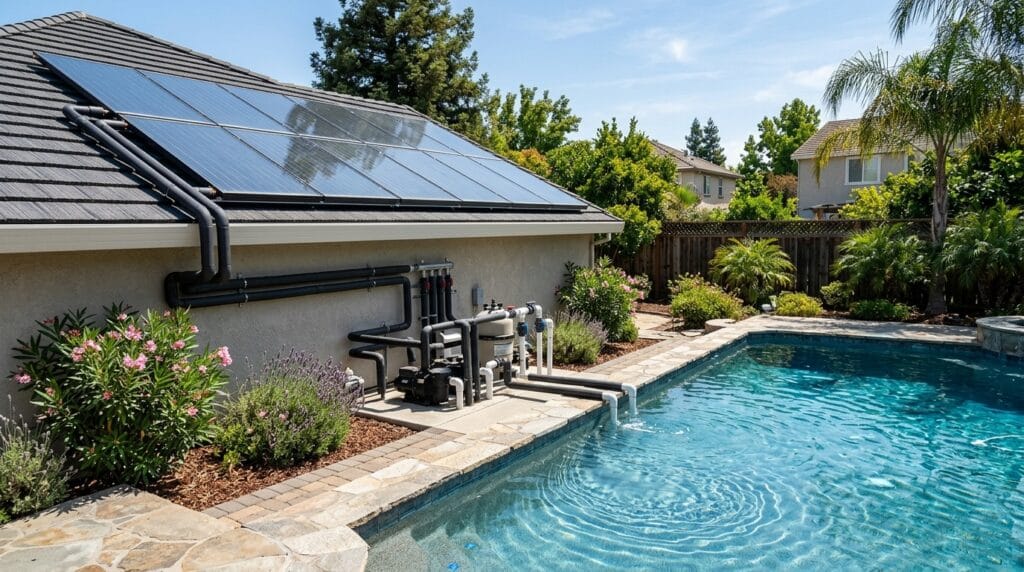
Solar pool heating efficiency can significantly reduce the energy needed to keep a pool comfortable, but the result depends on what you measure. Collector efficiency reflects how much sunlight becomes heat, while system efficiency also accounts for pumping, plumbing, controls, and heat loss. Understanding this distinction helps you determine whether a system is performing well, rather than relying only on an impressive rating.
For most pools, unglazed polymer collectors are an efficient choice because they deliver low-temperature heat directly from available sunlight. A properly sized system can provide substantial seasonal heating with minimal purchased energy, especially when paired with a pool cover. However, performance varies with weather, sunlight, pool size, and the desired water temperature. Solar heating works best as a steady, economical solution rather than an instant, on-demand heat source.
Key Takeaways
- Evaluate solar pool heating by whole-system performance and seasonal heat delivered—not collector efficiency alone. Account for certified thermal output, pump electricity, plumbing losses, controls, shading, and heat retention when comparing systems.
- Unglazed polymer collectors are usually the most cost-effective choice for low-temperature pool heating in sunny, mild climates. Their performance depends on proper sizing, sunlight, weather, pool size, and the desired swimming season.
- Proper sizing, efficient plumbing, smart controls, and strong sun exposure maximize useful heat. A pool cover is especially valuable because it reduces evaporation and nighttime heat loss, often improving savings more than adding collector capacity.
- Solar pool heating provides gradual, weather-dependent savings rather than instant heat. Calculate payback using installed costs, maintenance, pump energy, incentives, backup-heater use, and local seasonal conditions before choosing between solar, heat pumps, or conventional heaters.
Solar Pool Heating Efficiency Metrics
Collector thermal efficiency measures the useful heat captured by the solar collector divided by the sunlight striking its surface. It helps explain how effectively the panels convert solar energy, but it does not account for pump electricity, plumbing losses, controls, shading, or heat lost before water returns to the pool. Whole-system efficiency includes these real-world factors, making it a better indicator of delivered heat and operating cost. Seasonal solar fraction describes the percentage of a pool’s total seasonal heating demand supplied by solar energy rather than gas, electric, or another backup heater. Together, these metrics help buyers estimate energy savings and the long-term return on an efficiency upgrade.
Certified daily thermal output reports the amount of heat a complete collector can deliver under standardized testing conditions. It is typically expressed in BTUs per day for a defined collector area and operating temperature. This rating is often more useful for comparing pool-heating systems than efficiency percentages alone because it connects performance to actual heat production while accounting for collector size and test conditions. A system with a higher percentage efficiency may produce less total heat if it has a smaller surface area or operates under conditions unlike those at the pool. Buyers should compare certified output with installation size, local sunlight, expected seasonal solar fraction, pump consumption, and backup-heating needs to judge practical savings and long-term value.
Unglazed Collectors And Climate Fit
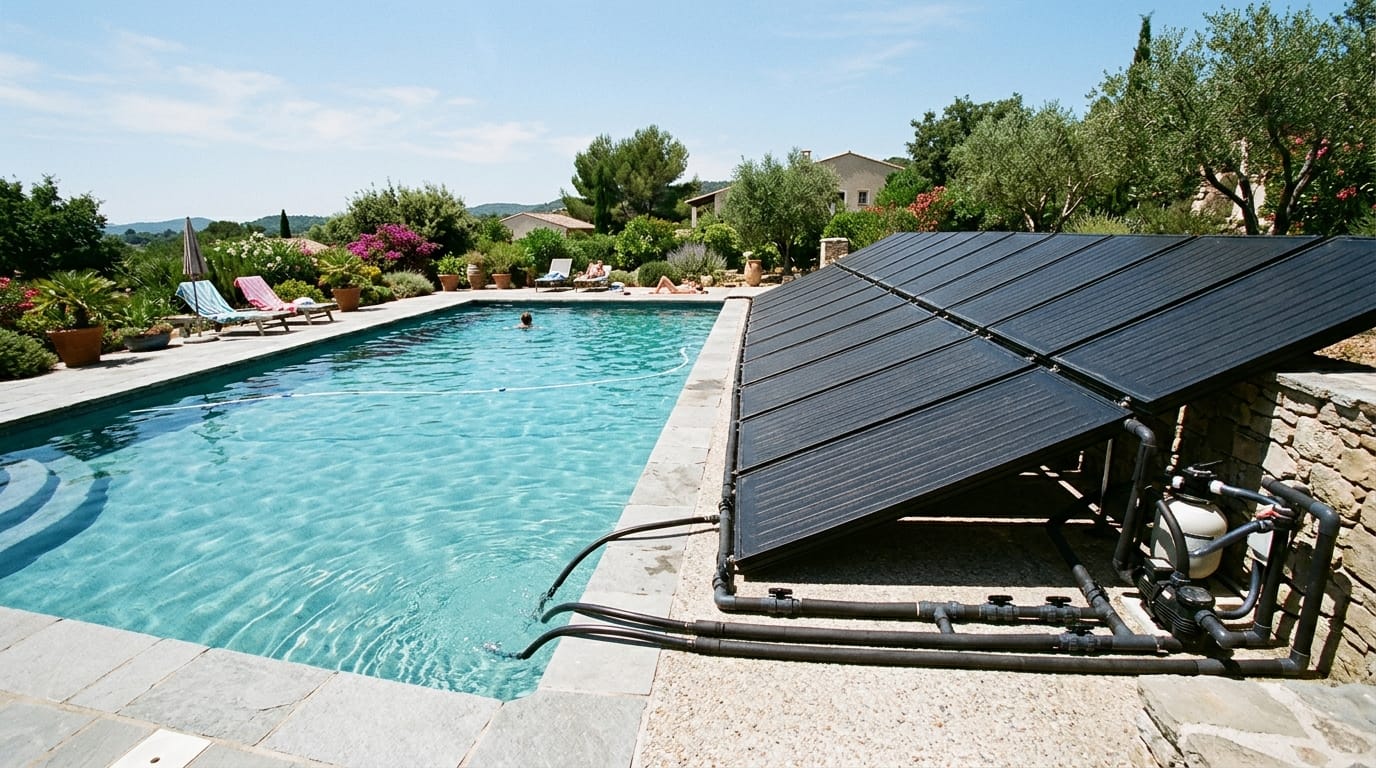
Unglazed polymer collectors are typically the most practical choice for low-temperature pool heating because they transfer heat efficiently when the collector is only slightly warmer than the surrounding air. In sunny climates with mild temperatures, they can extend the swimming season while using minimal purchased energy, supporting long-term savings and a lower operating footprint. Their relatively simple construction also tends to reduce upfront and maintenance costs compared with more complex collector designs. For buyers evaluating return on investment, the strongest results usually come from matching collector size, pool usage, and local solar conditions rather than pursuing the highest rated efficiency in isolation.
Glazed solar collectors use a glass covering and insulated enclosure to retain more heat during cool or windy weather. This advantage can make them more effective than unglazed collectors in colder conditions, but the added materials and installation complexity may not provide comparable value for a pool that needs only modest temperature increases in a warm climate. Unglazed systems generally perform best when sunlight is strong and the pool can operate near outdoor temperatures. Cloudy skies, rain, wind, and cooler air reduce heat output. Practical efficiency should therefore be judged by useful seasonal heat delivered, not by expecting consistent performance in all weather.
Seasonal limitations are important when estimating payback and planning a dependable pool climate control strategy. An unglazed system can provide substantial heat during sunny portions of the swimming season, but it usually cannot raise water temperature quickly after a cold spell or maintain a preferred temperature through extended poor weather. A backup heater, pool cover, or both may be worthwhile for early-season swimming, nighttime heat retention, and periods of limited sunshine. Including these measures in the financial analysis gives eco-conscious buyers a more realistic view of total costs, energy savings, and long-term value.
System Sizing And Heat Retention
Solar pool heating efficiency starts with matching collector surface area to the pool’s water volume, local climate, and desired swimming season. A larger pool generally needs more collector area, while an undersized array may produce modest temperature gains even on bright days. Collectors should face the strongest available sunlight with a site-appropriate orientation and tilt. Nearby trees, rooflines, and seasonal shadows should also be evaluated throughout the day. Because unglazed polymer collectors work best when raising water a few degrees above ambient temperature, sizing for steady seasonal heat is usually more cost-effective than expecting rapid, on-demand heating. A professional design that accounts for roof space, wind exposure, and backup heat can improve long-term return on the equipment investment.
Even well-placed collectors can lose delivered heat through restrictive plumbing, excessive pipe runs, or poorly selected valves. Short, adequately sized plumbing routes reduce friction and help move warmed water to the pool before it cools. The pump should run during productive sunlight hours, with an automatic controller that routes water through the collectors when they are warmer than the pool. Flow that is too low limits heat transfer, while flow that is too high can increase pumping electricity without a proportional increase in useful heat. Balancing collector flow, filter condition, pump speed, and operating schedule helps maximize system efficiency rather than simply maximizing circulation.
For many pools, a solar cover is the most valuable efficiency upgrade because evaporation is a major source of heat loss. Covering the surface when the pool is not in use can preserve more heat overnight and during windy conditions than adding collector capacity alone. It also reduces makeup water and the energy needed to reheat replacement water, improving operating savings and environmental performance. Owners comparing long-term return on investment should evaluate the cover, collector array, controls, and pump electricity as one system rather than judging collectors by peak output alone. This combined approach keeps more captured solar heat in the pool and can shorten the payback period for a sustainable pool climate control upgrade.
ROI And Solar Heating Payback
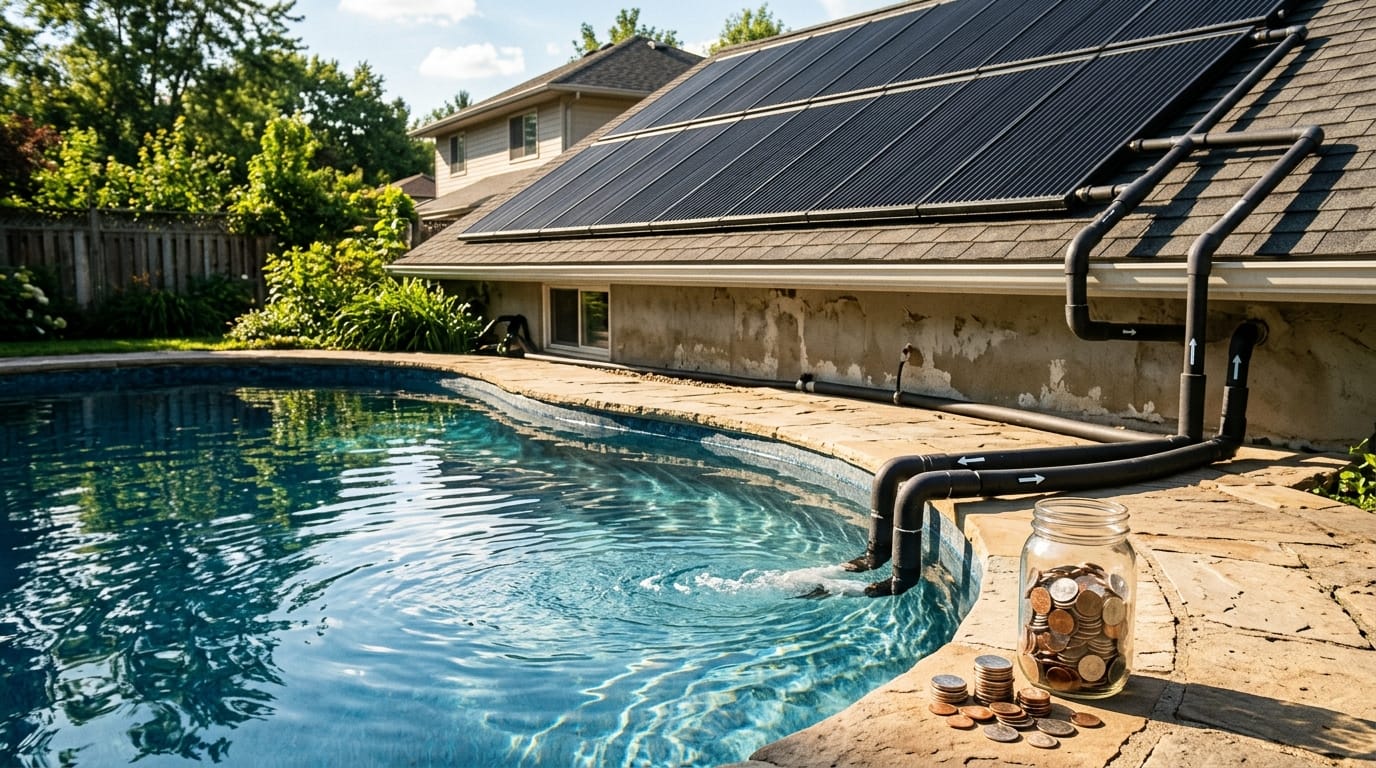
Solar pool heating efficiency is best evaluated by the useful heat delivered over an entire swimming season, not by how quickly the water warms on a single day. Start with the installed cost of properly sized unglazed collectors, controls, valves, and plumbing. Then estimate avoided gas or electric heating expenses based on your local climate, pool size, season length, and desired temperature. Include the electricity used by the circulation pump, along with routine maintenance, valve replacement, and any additional service costs. Incentives or rebates can reduce the upfront investment, while a typical service life of roughly 10 to 20 years can spread the benefit across many seasons.
A practical payback estimate subtracts annual pump electricity and maintenance from expected heating savings, then divides the installed cost after incentives by the net yearly savings. Compare this result with a heat pump by considering its electricity consumption, operating performance in cooler weather, purchase price, and ability to maintain temperature. Conventional gas or electric heaters should be evaluated for fuel costs and rapid heating capability. Solar systems often deliver a strong long-term return because they use free sunlight and require little purchased energy once installed. However, savings vary with cloud cover, shading, collector size, pool-cover use, and seasonal weather, so a site-specific estimate is more reliable than a national average.
Because solar heating usually raises water temperature gradually and depends on available sunshine, it is most valuable for extending the swimming season and maintaining comfortable temperatures rather than providing rapid, on-demand warmth. A pool cover can improve the financial return by reducing evaporation and nighttime heat loss, allowing more collected solar energy to remain in the water. For a fair comparison, model monthly heating demand, expected solar contribution, backup-heater use, pump electricity, maintenance, incentives, and replacement timing over the system’s service life. This approach shows whether the lower operating cost and environmental benefits of solar justify its slower, weather-dependent performance compared with a heat pump or conventional heater.
Maximize Solar Pool Heating Efficiency
Solar pool heating can deliver strong long-term energy savings when the system is properly sized for the pool, local sunlight, desired season, and target water temperature. Unglazed polymer collectors are often an efficient match for low-temperature pool heating, providing substantial seasonal heat with minimal purchased energy during sunny conditions. However, performance depends on more than collector efficiency alone. Buyers should compare certified thermal output and complete system costs, including pumps, controls, installation, and maintenance. A well-fitted pool cover and other heat-retention measures can reduce nighttime and windy-weather losses, helping the system achieve a higher practical solar fraction.
Because solar heat is weather-dependent, expected performance should be evaluated against local climate data, seasonal operating goals, and the need for backup heating. A lower upfront price may not deliver the best return if the system is undersized, loses heat through poor plumbing or an uncovered surface, or requires frequent supplemental heating. Before investing, review projected energy savings, certified test results, total ownership costs, and the balance between solar contribution and backup demand. To plan an efficient outdoor upgrade, explore professional backyard remodeling services in Los Angeles and learn how solar pool heating can be integrated with effective heat retention.
Frequently Asked Questions
1. What does solar pool heating efficiency mean?
Solar pool heating efficiency describes how effectively sunlight is converted into useful heat for your pool. Collector efficiency measures heat captured by the panels, while whole-system efficiency also includes pumping, plumbing, controls, shading, and heat loss before the water returns to the pool.
2. Are unglazed polymer collectors efficient for pool heating?
Yes, unglazed polymer collectors are usually an efficient choice because they provide low-temperature heat directly from available sunlight. They are particularly effective for maintaining comfortable pool temperatures when the system is properly sized and used with a pool cover.
3. What factors affect solar pool heating efficiency?
Efficiency depends on sunlight, weather, shading, collector orientation, pool size, plumbing design, pump operation, and the temperature you want to maintain. Heat loss from evaporation is also significant, so a pool cover can substantially improve practical performance.
4. How does a pool cover improve solar heating efficiency?
A pool cover reduces evaporation, which is one of the largest sources of heat loss from an uncovered pool. By retaining more of the heat supplied by the solar system, a cover can lower heating demand, improve comfort, and increase the seasonal value of the collectors.
5. What is the difference between collector efficiency and whole-system efficiency?
Collector efficiency is the percentage of sunlight striking the collector that becomes useful heat. Whole-system efficiency provides a more realistic performance measure because it also considers pump electricity, plumbing losses, controls, shading, and heat lost before the heated water reaches the pool.
6. What is seasonal solar fraction, and why does it matter?
Seasonal solar fraction is the percentage of your pool’s total seasonal heating demand supplied by solar energy instead of gas, electricity, or another backup source. A higher solar fraction generally means greater fuel savings, but the result depends on climate, pool use, desired temperature, and how effectively the pool retains heat.
7. How can you compare the output of different solar pool heating systems?
Certified daily thermal output can help you compare the heat a complete collector delivers under standardized testing conditions, often in BTUs per day for a defined collector area and operating temperature. Use this rating alongside collector area, installation conditions, and expected system losses, since a laboratory output figure does not guarantee identical performance at your property.
8. Can solar pool heating provide instant heat on demand?
Solar pool heating works best as a steady, economical way to maintain a comfortable temperature rather than as an instant heat source. Performance varies with sunlight and weather, so you may need a properly sized system, a pool cover, or backup heating to meet temperature goals during cloudy periods or unusually cool conditions.