
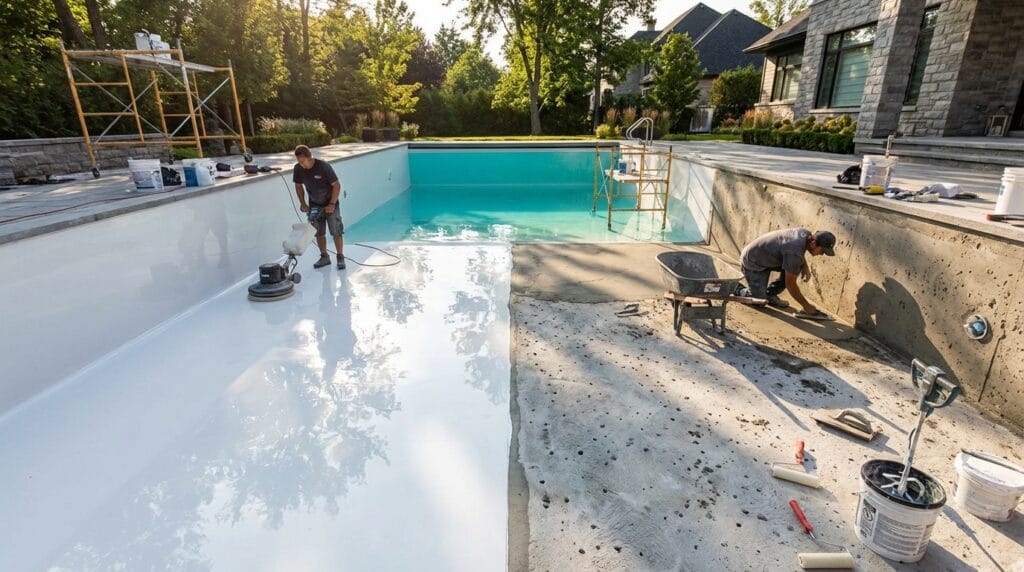
Choosing the right swimming pool material often comes down to a battle between immediate aesthetic freedom and the reality of long-term upkeep. While a custom masonry finish offers undeniable beauty, the debate over fiberglass vs concrete resurfacing reveals a massive difference in how much time and money you will spend on repairs. Homeowners must decide if the initial design flexibility of a concrete build is worth the inevitable cycle of draining, scraping, and refinishing the shell.
The structural integrity of your backyard oasis depends heavily on the durability of its interior surface. Concrete is naturally porous, creating a breeding ground for stubborn algae and requiring a total resurface nearly twice as often as its composite counterparts. In contrast, the high-performance gelcoat on a fiberglass pool provides a smooth, non-porous barrier that resists chemical wear for decades. Understanding these maintenance lifecycles is the key to ensuring your investment remains a place of relaxation rather than a recurring construction project.
Key Takeaways
- Fiberglass resurfacing offers a significantly longer lifespan of twenty years or more, nearly doubling the seven-to-fifteen-year maintenance cycle required by traditional concrete plaster.
- The non-porous gelcoat of fiberglass prevents algae from taking root and resists chemical corrosion, resulting in lower chemical costs and less physical scrubbing compared to porous concrete surfaces.
- While concrete provides greater initial design flexibility and lower upfront costs, fiberglass delivers a superior long-term return on investment by reducing the total cost of ownership over several decades.
- Choosing fiberglass over concrete creates a more stable chemical environment and protects the pool’s structural integrity by eliminating the ‘chemical seesaw’ caused by reactive masonry finishes.
Comparing Resurfacing Frequency and Material Longevity
Choosing the right material for your pool renovation is a pivotal decision that directly impacts your long-term maintenance schedule and budget. Traditional concrete plaster is a porous material that remains susceptible to chemical imbalances and algae penetration, which eventually leads to staining or pitting. Because of this natural degradation, homeowners with concrete pools should expect a resurfacing interval of every seven to fifteen years. While concrete offers incredible design flexibility, the ongoing cost of these frequent renovations can quickly add up over the lifetime of the pool.
In contrast, fiberglass resurfacing utilizes a high performance gelcoat that provides a much smoother and more resilient finish than traditional masonry. This non-porous surface acts as a barrier against algae growth and resists the corrosive effects of pool chemicals far better than plaster or pebble finishes. As a result, a professionally applied fiberglass coating can easily last twenty years or more before requiring significant attention. This extended lifecycle makes fiberglass an attractive option for those looking to minimize the frequency of disruptive and expensive construction projects in their backyard.
When you weigh these two options, the primary trade-off is between the initial customization of concrete and the superior longevity of fiberglass. Concrete requires more aggressive chemical treatments and frequent scrubbing to keep the surface clean, which further accelerates the wear on the material. Fiberglass remains structurally stable and aesthetically pleasing with much less effort, allowing you to spend more time enjoying the water and less time managing a renovation timeline. Ultimately, selecting fiberglass means investing in a durable solution that significantly reduces the total cost of ownership over several decades.
Porosity Impacts on Algae and Chemical Maintenance
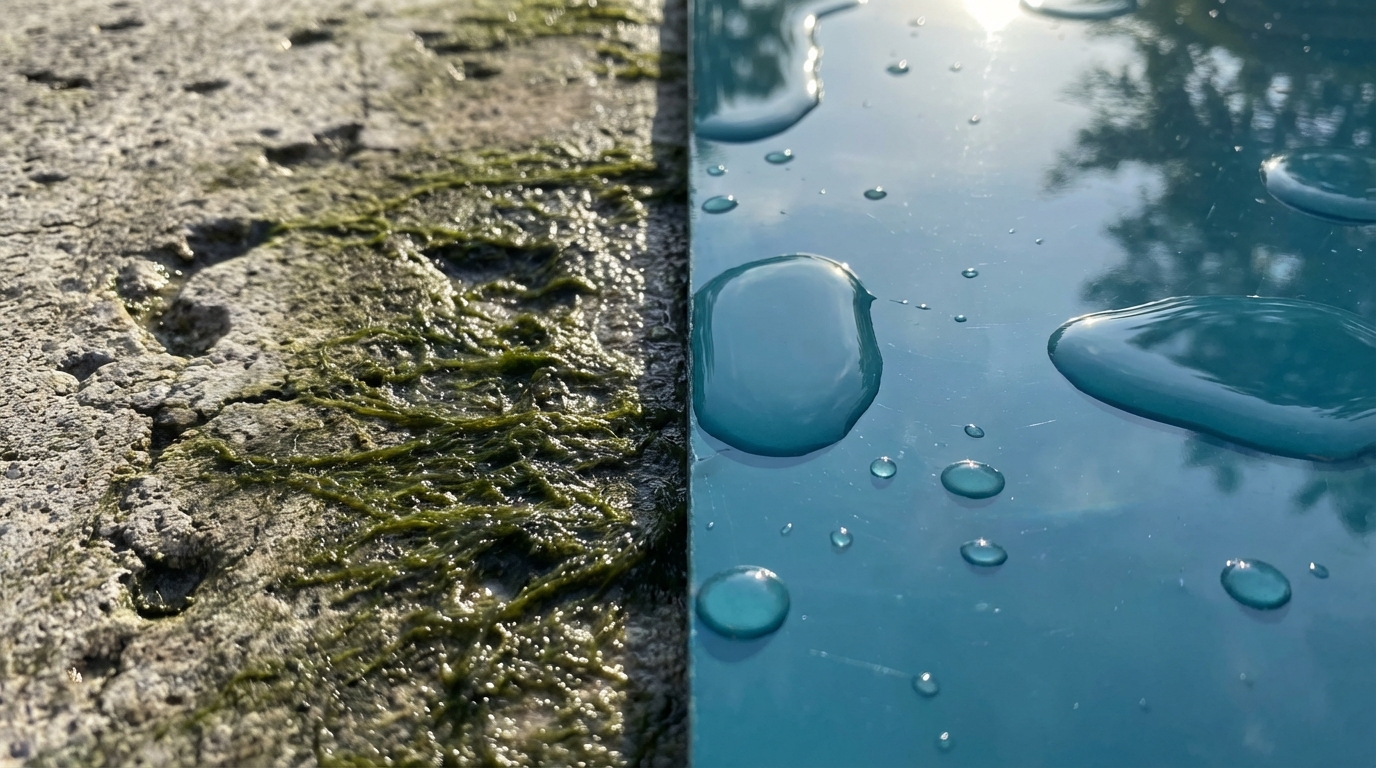
The fundamental difference between fiberglass and concrete resurfacing lies in the surface porosity, which directly dictates your weekly maintenance routine. Concrete is a naturally porous material, featuring a textured surface full of microscopic nooks and crannies where algae can easily take root and flourish. Once algae embeds itself into these pores, it becomes incredibly difficult to remove, often requiring intensive scrubbing and high doses of specialty algaecides. Homeowners with concrete pools frequently find themselves in a constant battle against these blooms, leading to higher costs and more time spent poolside with a brush rather than enjoying the water.
Fiberglass resurfacing utilizes a high performance gelcoat that creates a smooth, non-porous barrier between the water and the pool structure. This slick surface acts as a shield, preventing algae from finding a foothold and allowing most debris to be wiped away with minimal effort. Because the surface is inert and non-reactive, it does not interfere with the water chemistry or require the heavy chemical loads needed to sanitize a pitted concrete finish. This transition to a non-porous surface results in a more stable environment where pH levels remain consistent, significantly reducing the amount of money spent on balancing chemicals throughout the season.
Choosing fiberglass over traditional plaster or pebble finishes eliminates the cycle of aggressive chemical treatments that eventually degrade a pool’s interior. Concrete surfaces are chemically active, meaning they constantly interact with the water and can cause pH levels to spike, necessitating the frequent addition of muriatic acid. Fiberglass provides a neutral environment that preserves your equipment and extends the life of your pool’s finish by avoiding this caustic chemical seesaw. By opting for a fiberglass resurface, you are investing in a low maintenance lifestyle that prioritizes water clarity and chemical efficiency over labor intensive upkeep.
Long-Term Cost Analysis of Surface Restoration
When evaluating the financial impact of pool restoration, many homeowners are initially drawn to concrete plastering due to its lower upfront installation cost. While traditional plaster or pebble finishes offer immediate savings during the renovation phase, these materials are inherently porous and prone to chemical degradation over time. This susceptibility often leads to a cycle of resurfacing every seven to ten years, as the rough texture invites algae growth and requires aggressive chemical treatments. Over the lifespan of the pool, these recurring labor and material costs can quickly eclipse the initial savings provided by the cheaper concrete option.
Fiberglass resurfacing represents a more strategic long-term investment by significantly extending the intervals between major maintenance projects. The smooth, non-porous gelcoat finish acts as a durable barrier that prevents algae from rooting into the structure, which reduces the need for expensive specialty chemicals and intensive scrubbing. Because the surface is inert and does not react with the water chemistry, owners typically experience lower monthly utility and chemical expenses. These operational savings, combined with a lifespan that often exceeds fifteen years, allow the higher initial cost of fiberglass to pay for itself through reduced upkeep.
The decision between these two methods ultimately hinges on whether a homeowner prioritizes current cash flow or total cost of ownership. Concrete remains a viable choice for those seeking custom shapes or immediate affordability, but it demands a commitment to frequent physical maintenance and eventual replacement. Conversely, fiberglass provides a high-performance finish that preserves the structural integrity of the shell while offering a predictable, low-maintenance financial profile. By choosing a material that resists wear and tear more effectively, property owners can enjoy their pool with fewer interruptions and more manageable long-term expenses.
Choosing Between Custom Flexibility and Low-Maintenance Durability
Ultimately, the choice between fiberglass and concrete resurfacing comes down to whether you prioritize immediate design flexibility or long-term ease of ownership. Concrete remains the standard for homeowners who want a fully customized shape or depth, such as those found in luxury sloped backyard pools, but it requires a commitment to more frequent and rigorous maintenance lifecycles. Because concrete is porous, it is susceptible to algae growth and chemical erosion, leading to a resurfacing cycle that typically occurs every decade. If you prefer a hands-on approach to pool care and do not mind the higher lifetime costs of replastering, concrete is a solid traditional choice.
In contrast, fiberglass resurfacing offers a high-performance alternative that significantly reduces the time and money spent on future upkeep. The non-porous gelcoat surface acts as a protective barrier that resists staining and prevents algae from taking root, which translates to fewer chemicals and less scrubbing. While the initial investment for a high-quality fiberglass finish can be higher, the extended lifespan of fifteen to twenty years provides a much better return on investment. Homeowners who want to spend more time swimming and less time managing structural repairs tend to find that fiberglass aligns best with their lifestyle.
Before making your final decision, consider how long you plan to stay in your home and your annual budget for pool chemicals and professional cleaning. Concrete provides that classic aesthetic and limitless versatility, but the financial burden of resurfacing twice in twenty years can be a significant drawback. Fiberglass simplifies the renovation process by providing a durable, smooth finish that stands up to the elements for decades. By weighing these structural differences against your financial goals, you can select the technology that ensures your pool remains a source of relaxation rather than a source of stress.
Frequently Asked Questions
1. How often do you need to resurface a concrete pool compared to fiberglass?
Concrete pools typically require a full resurface every seven to fifteen years due to the porous nature of the plaster. In contrast, the high performance gelcoat used in fiberglass resurfacing is designed to last for decades, significantly extending the time between major renovations.
2. Which material is better for preventing algae growth?
Fiberglass is the superior choice for algae resistance because its non-porous gelcoat surface prevents organic matter from taking root. Concrete is naturally porous, which creates a breeding ground for stubborn algae that can lead to staining and pitting over time.
3. Is concrete resurfacing more expensive in the long run?
Yes, the ongoing costs of concrete are generally higher because it requires resurfacing nearly twice as often as fiberglass. While concrete offers initial design flexibility, the recurring cycle of draining, scraping, and refinishing the shell adds up to a much larger investment over the life of the pool.
4. Can fiberglass resurfacing improve the chemical resistance of my pool?
Fiberglass provides a resilient barrier that better resists chemical wear and corrosive effects compared to traditional masonry. This durability helps you maintain a stable environment and protects the structural integrity of your pool’s interior surface.
5. What are the main drawbacks of choosing a concrete finish?
The primary drawbacks are the high maintenance requirements and the susceptibility to surface degradation. Because concrete is porous, it is prone to chemical imbalances that cause the material to break down, necessitating frequent and costly repairs.
6. Why is a smooth gelcoat finish preferable for pool owners?
A smooth gelcoat finish provides a high performance barrier that is easier to clean and much softer on your skin. This non-porous surface ensures your pool remains a place of relaxation rather than a recurring construction project, saving you both time and money.